When the Screen Door Announced Every Visitor
Before doorbell cameras, a spring hinge and a familiar slam told the whole house who had arrived.
The screen door never entered a room quietly. It gave a quick wooden clap, bounced once against its frame, and settled with the faint complaint of a spring. On warm days, that sound moved through the house faster than a voice. Someone was home. Someone had come calling. Or a child had forgotten, once again, not to let it slam.
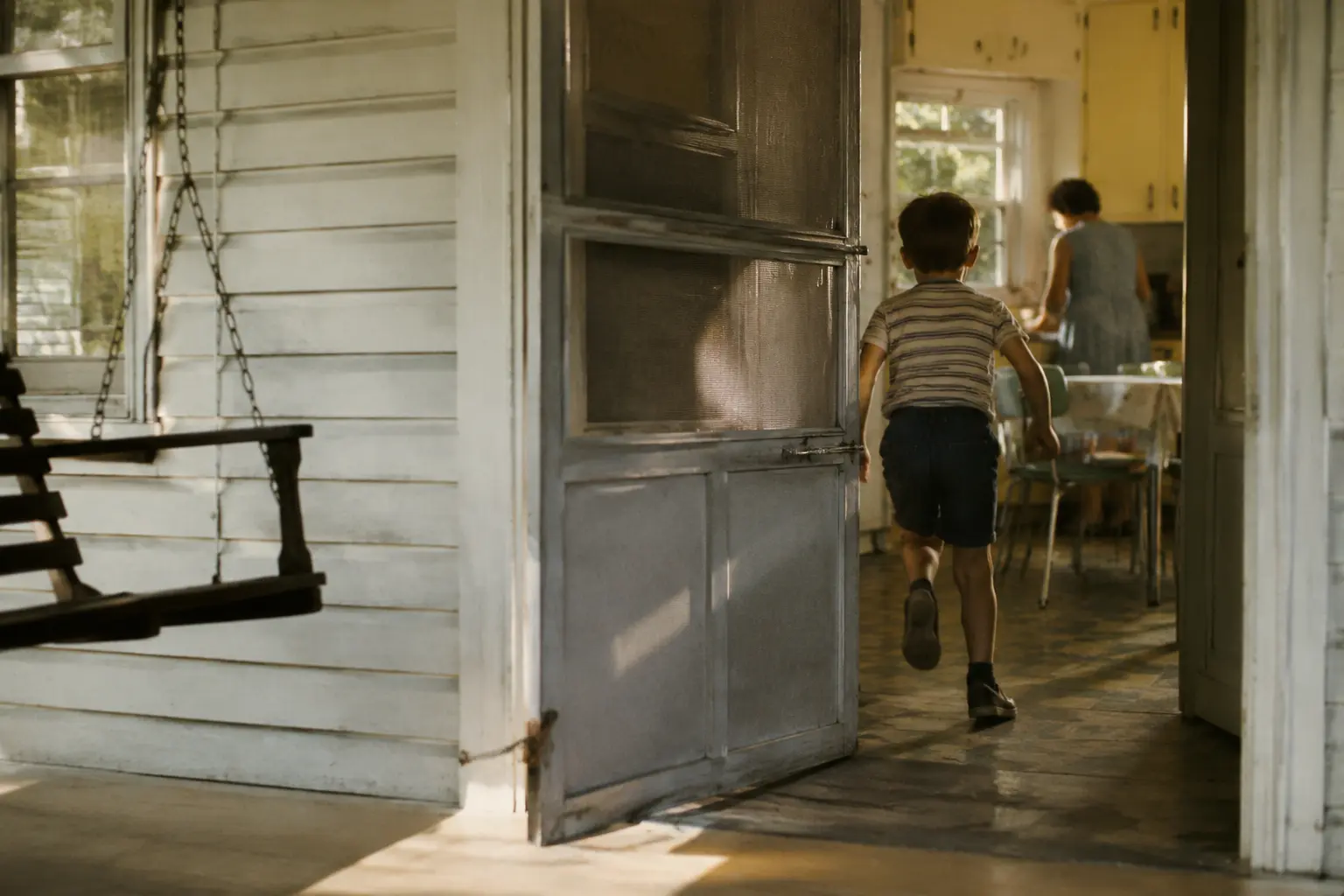
A sound with a name attached
Every household learned its own door like a language. A careful visitor caught the handle and eased it shut. A cousin in a hurry let it fly. Children carried a different rhythm altogether: slap, footsteps, then a voice calling from the kitchen to ask where they were going next. Long before anyone appeared in the room, the door had offered a clue.
The details changed from place to place. Some doors opened onto a shaded porch; others faced a narrow stoop, a farmyard, or a city alley. The mesh might carry a patch in one corner, and the handle could grow hot in the afternoon sun. What many people remember is not a perfect object but a useful one, worn smooth by ordinary traffic.

The house could breathe
With the main door open, the screen became a soft border between indoors and out. It let in the smell of cut grass, rain on pavement, supper from the next yard, and the hum of an evening neighborhood. It also admitted dust, distant radios, barking dogs, and every argument children thought adults could not hear.
Families lived with more of the surrounding world in the room. A conversation on the porch drifted toward the kitchen. A parent could call a name without stepping outside. The boundary of home felt less sealed, and the day arrived through the mesh in fragments of sound and weather.
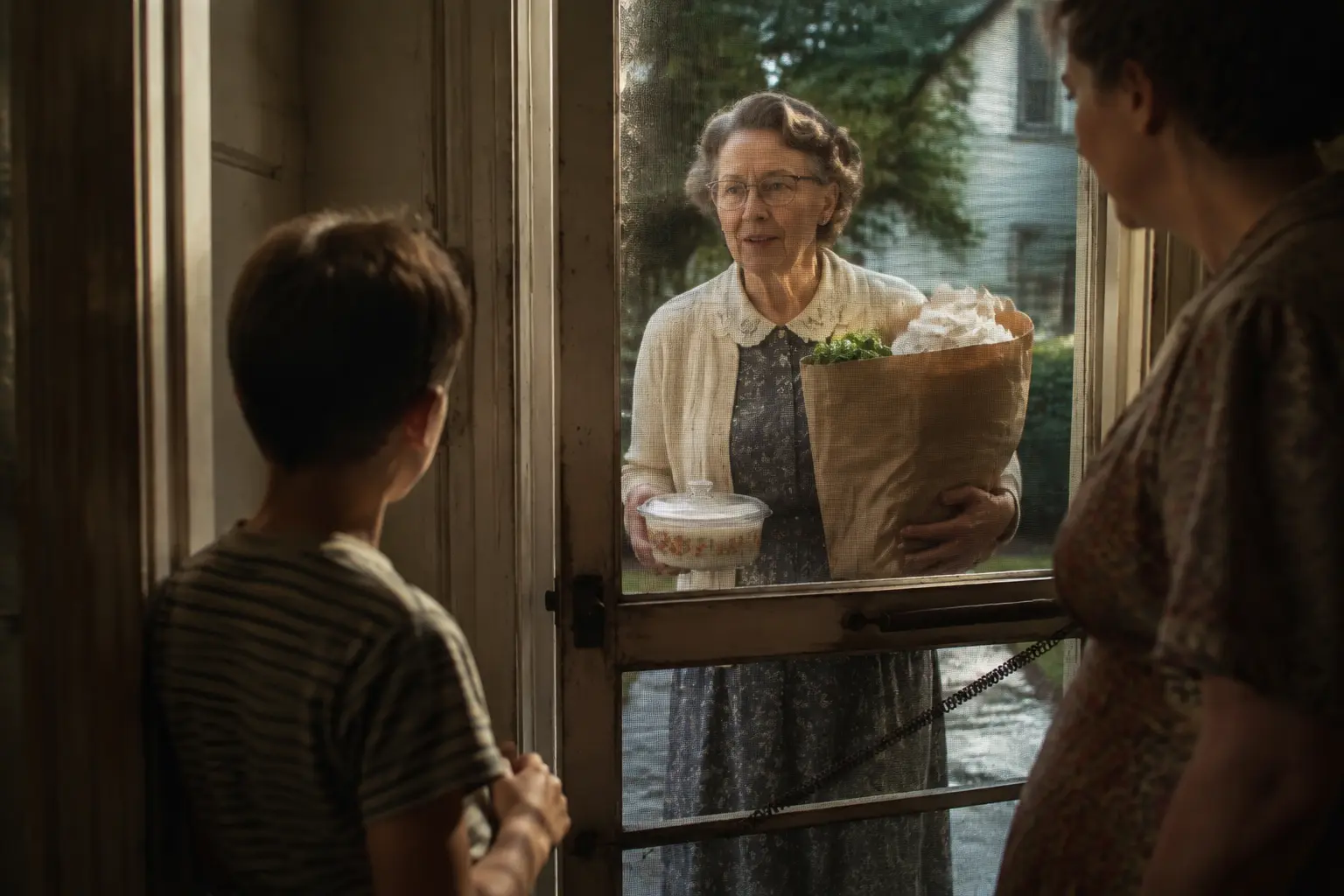
The sound was ordinary then. Memory turned it into an announcement that home was still full of people.
Why the slam stayed with us
A screen door was built to be passed through, not admired. That may be why it carries so much memory. It marked departures that lasted ten minutes and arrivals that mattered for years. It closed behind grandparents carrying grocery bags, friends looking for someone to play with, and neighbors bringing a borrowed dish back.
Today, quieter hinges and climate-controlled rooms may do their jobs better. Still, that imperfect slam can return in an instant when an old door closes somewhere nearby. For a moment, the whole house seems open again, and someone familiar is just about to walk into the room.
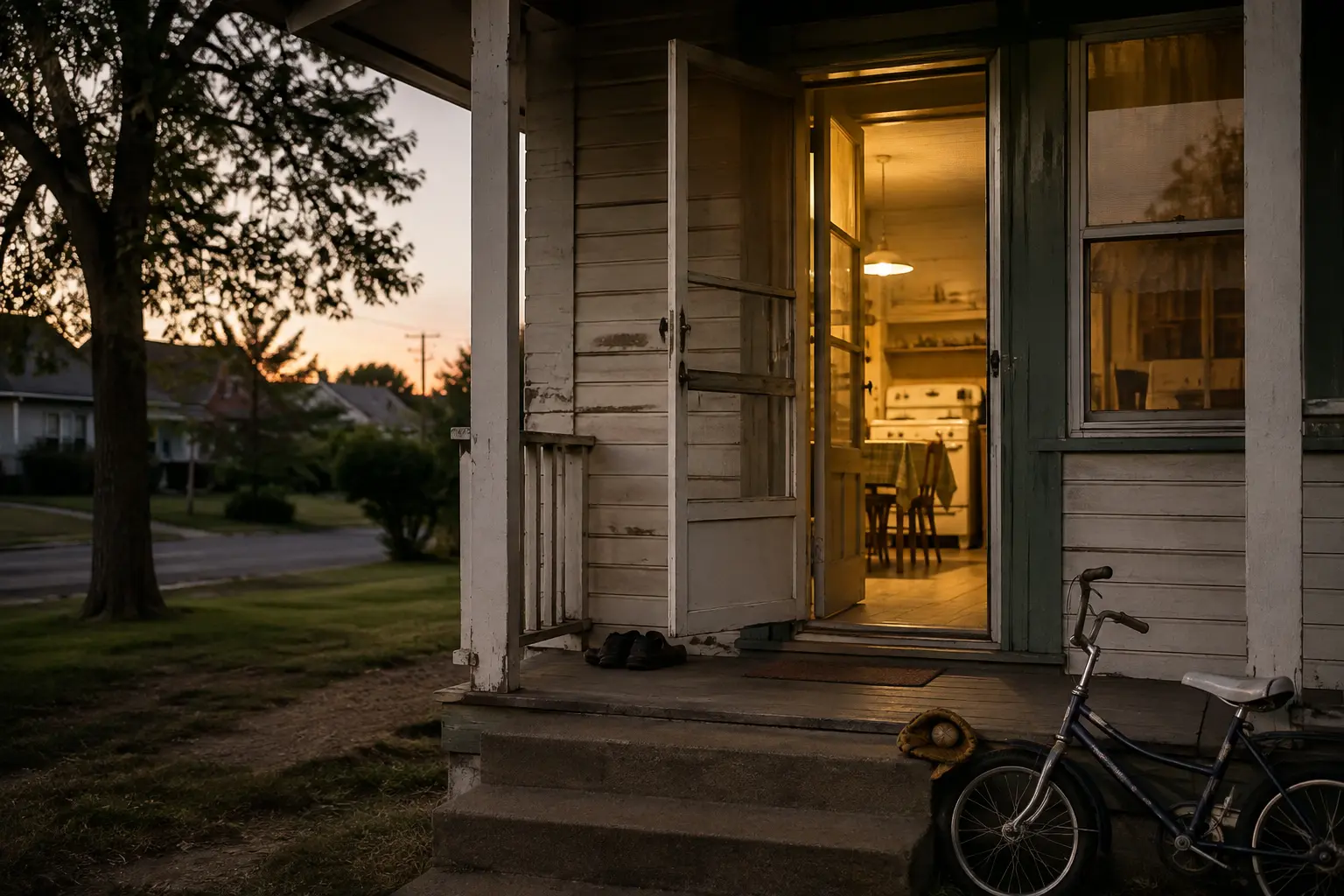
A sound that carried a whole neighborhood
The door was more than hardware. It marked the soft boundary between the private life of the house and the shared life of the porch, yard, and sidewalk. Children passed through it with wet feet, neighbors leaned against it while finishing a conversation, and relatives called a greeting before the spring had finished snapping shut.
Years later, people often remember the sound before they remember the room. It returns with the smell of cut grass, a radio playing through an open window, or the feeling of being expected home before the streetlights came on. The slam could be irritating then. In memory, it becomes proof that somebody was always arriving.
The last trip through the door
Childhood doors are rarely remembered on the day a family leaves them for the last time. The final crossing may be hidden inside a hurried move, a visit after the house has changed hands, or an ordinary goodbye that did not feel final. Only later does the mind return to the handle, the resistance of the spring, and the familiar sound falling behind someone.
That is why a screen door can carry more feeling than its materials suggest. It belonged to hundreds of insignificant arrivals, and those repetitions made it reliable. The people, porch, and neighborhood may change beyond recognition, but one similar slam on a summer evening can rebuild the route from the yard to the kitchen in an instant.
Preserving a sound instead of an object
A screen door may be too ordinary to save, but its sound can still be documented. Family members can describe it in an oral history, record a surviving door, or write down the names of the people whose arrival had a recognizable rhythm. The goal is not to turn every household detail into an artifact. It is to notice which details still open a path to a person or place.
Memories become easier to pass forward when they include sensory clues. “The old house” is broad; the slap of the door, warm mesh beneath a palm, and kitchen light beyond the porch give the next generation somewhere to stand.
What did the door to your childhood home sound like, and who do you picture walking through it?
Library of Congress Prints & Photographs · National Museum of American History Collections
This story is an original cultural-memory essay. Details varied across families, communities, and regions.