The Hallway Closet That Held Every Season
Behind one narrow door lived winter coats, board games, lost gloves, and the evidence of years.
The hallway closet looked ordinary from the outside: a painted door, a familiar knob, perhaps a scuff near the bottom. Inside, it attempted the impossible. It held winter and summer, guests and school days, sudden rain and long-forgotten projects—all arranged in a space barely deep enough for a row of coats.
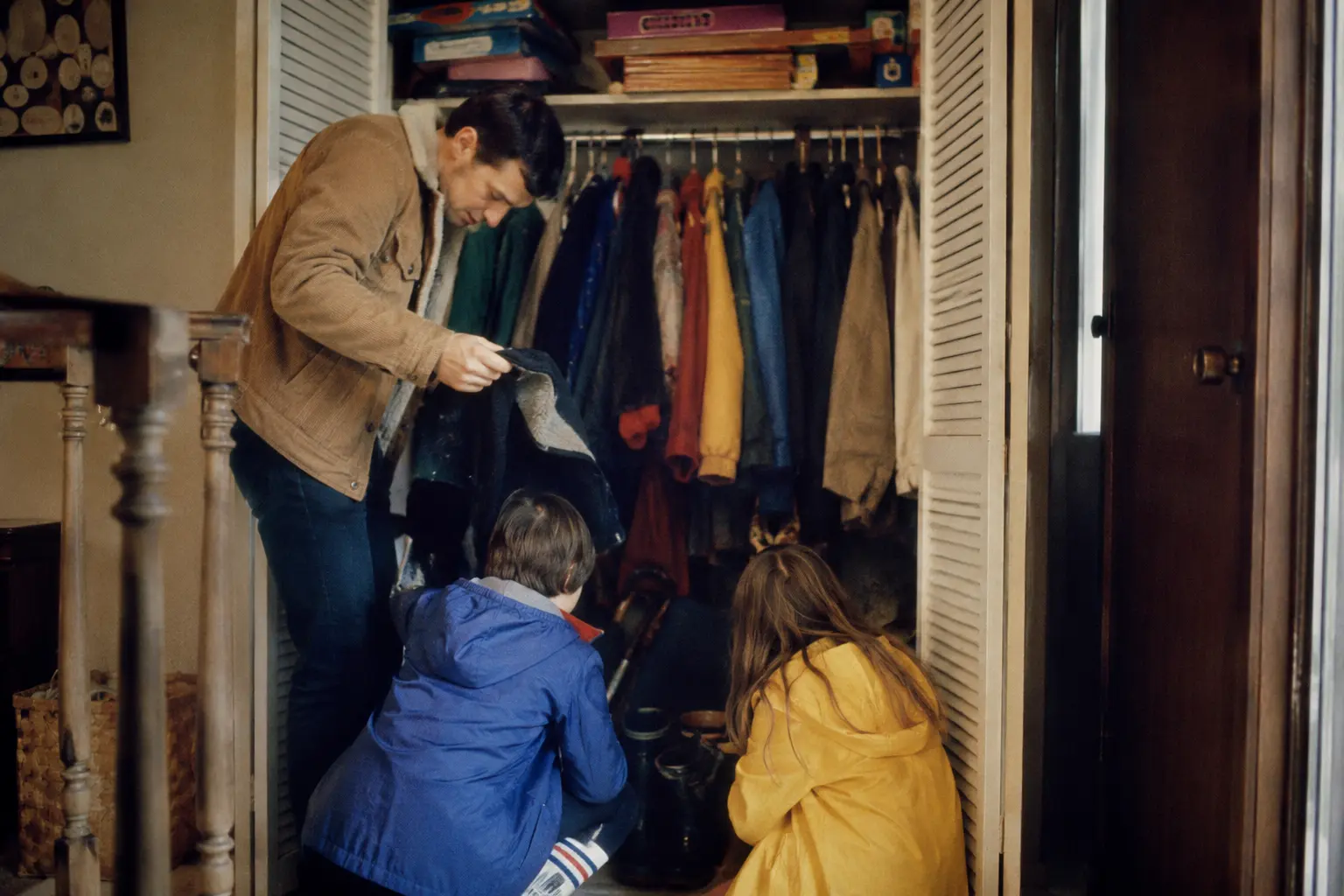
A household compressed
Coats formed the first layer, their shoulders overlapping and sleeves tangled together. Behind them waited the things used less often: an umbrella with a stubborn catch, a vacuum attachment no one could identify, a folding chair, a paper bag filled with smaller paper bags. The shelf above demanded confidence. Removing one item could disturb an entire private architecture.
Families organized these closets in different ways, but gravity eventually had its opinion. Gloves separated from their partners. Scarves slipped behind boots. A hat last worn two winters ago appeared just when its owner had stopped looking. The closet did not lose things exactly; it delayed their return.
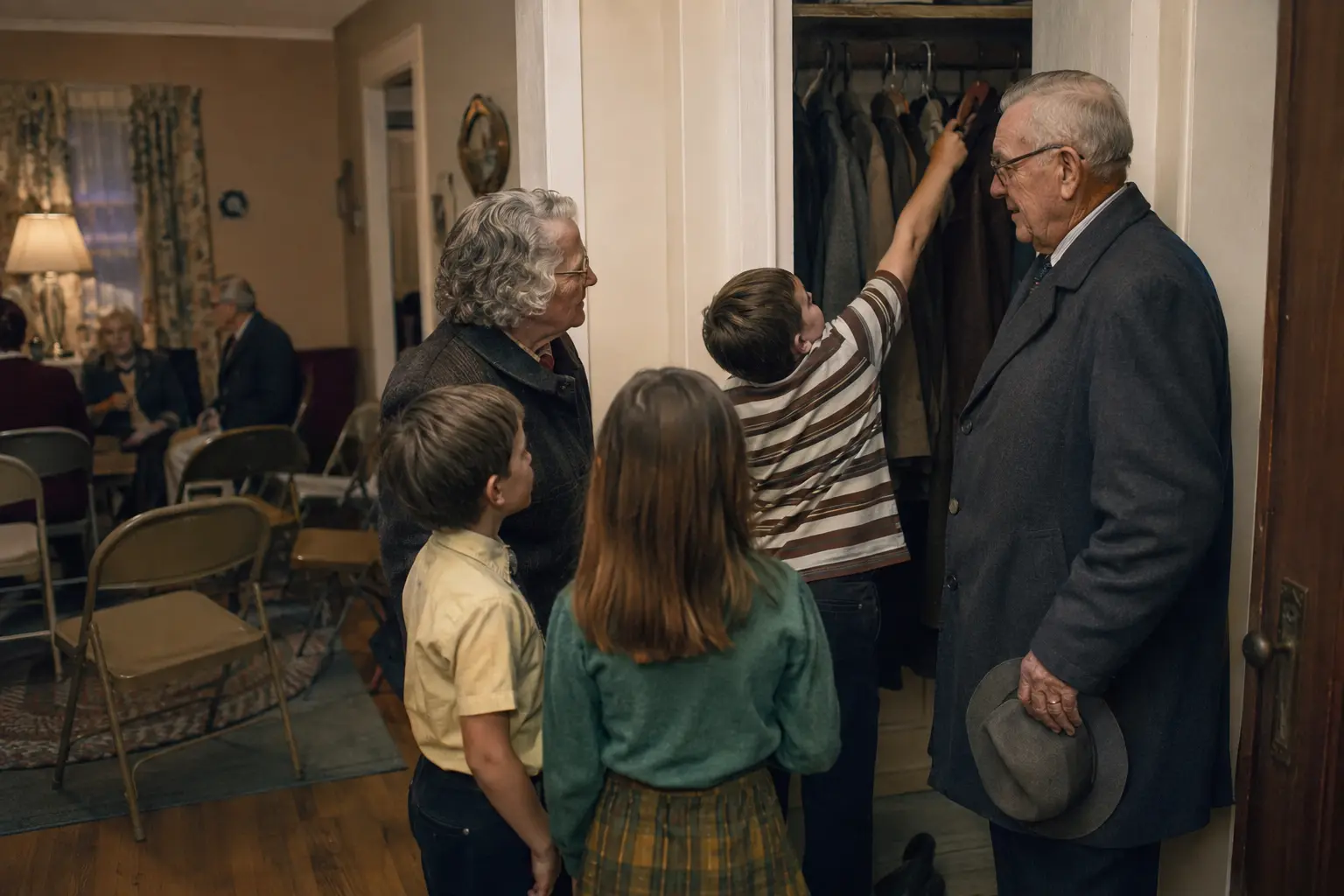
Where guests and seasons arrived
When company came, someone opened the door and made room. Guest coats joined the family collection, and the closet briefly held the shape of everyone gathered nearby. At the end of the evening, people stood in the hallway identifying what belonged to whom, extending the goodbye while sleeves were found and buttons fastened.
The closet also announced seasonal change. Heavy coats moved forward with the first cold days. Rain gear returned in spring. Beach towels or picnic blankets might emerge when school ended. Without ceremony, the household rotated its equipment and acknowledged that another part of the year had begun.
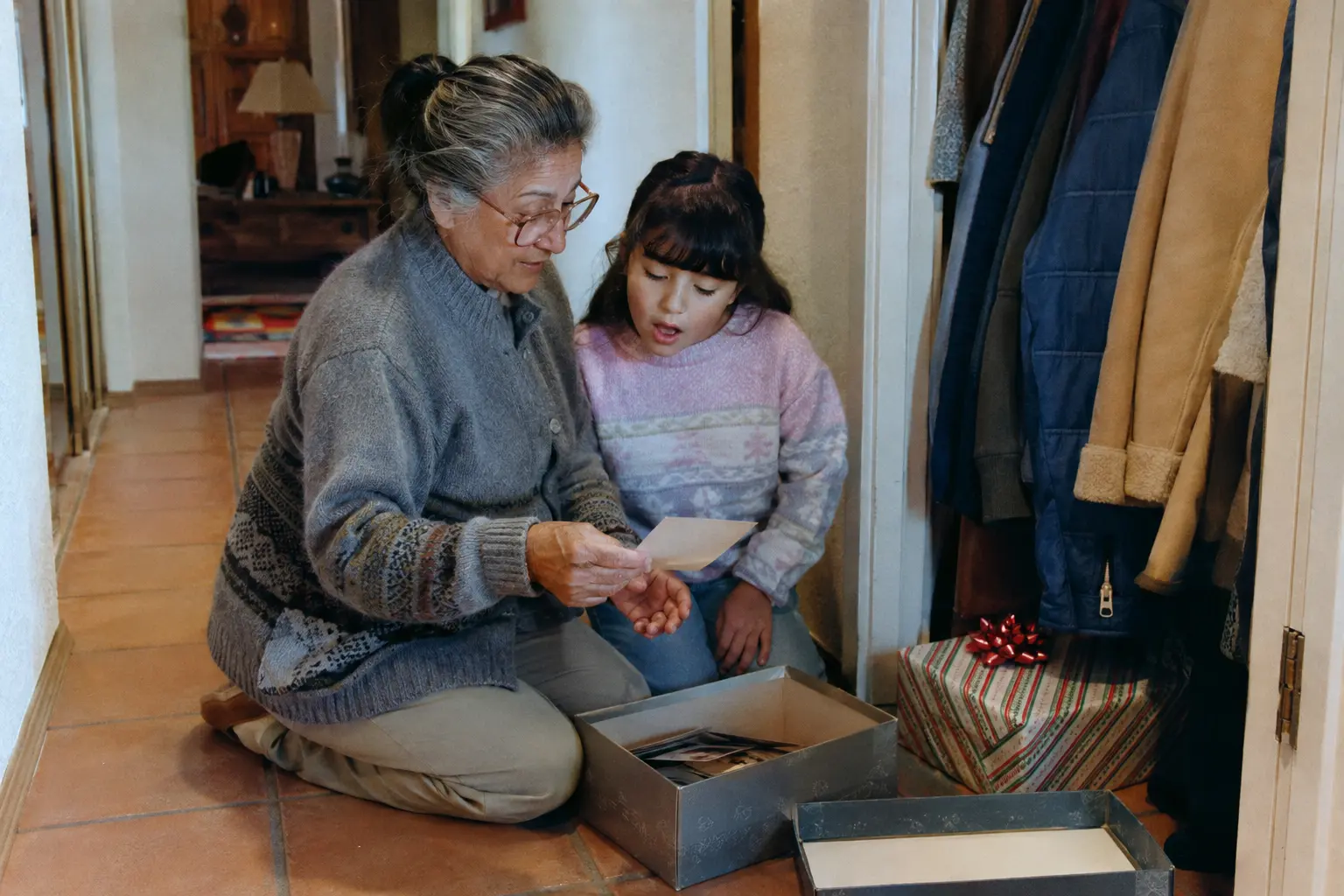
The closet was crowded because a family kept moving forward while its objects quietly stayed behind.
The surprise behind the door
Children sometimes discovered more than clothing there. A hidden present, a game reserved for rainy days, or a box of old photographs could turn the closet into an accidental archive. Adults found receipts in pockets, a ticket stub, or a note from a year that now felt distant.
Modern storage advice favors clear bins and careful labels, and with good reason. Yet the crowded hallway closet offered a different pleasure: discovery. It reminded a family that daily life leaves layers. Open the door carefully enough and an earlier season might fall gently into your hands.
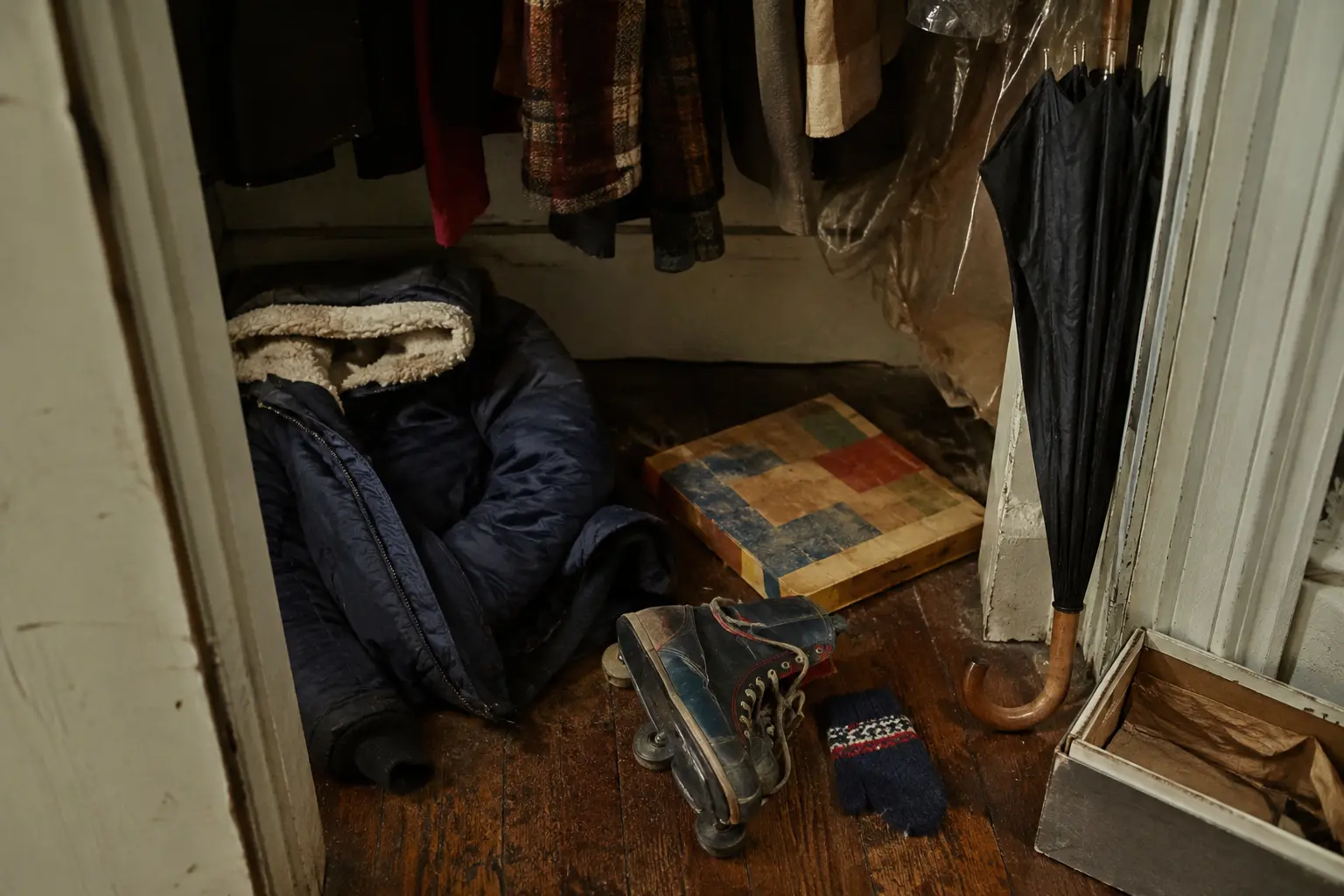
A family archive without labels
Unlike a photo album, the hallway closet was never arranged to tell a story. That is why it told one so honestly. A small coat pushed behind the adult ones marked a child who had grown. A board game with a repaired corner remembered winters indoors. An umbrella from a long-closed store survived simply because it still worked.
Searching the closet was its own ritual. Someone held the door, someone reached past the vacuum, and someone insisted the missing mitten had been seen last week. The object might never appear, but the search uncovered other forgotten things. Every crowded shelf proved that family history often accumulates where nobody intends to preserve it.
Why small objects unlock large memories
A single mitten can recall the walk to school more vividly than a formal portrait. An umbrella can bring back a particular rainy morning, and a board game piece can restore the voices around a winter table. These objects were handled rather than displayed, so memory attached itself to their weight, texture, and ordinary place in a routine.
Opening an old closet often reveals that sentimental value was assigned after the fact. Nobody saved the object because it represented an era; it survived because it was useful, forgotten, or difficult to throw away. Time did the curating. What remains becomes a set of accidental clues to the people who once reached through the same crowded door.
Before the closet is cleared
Clearing an old home often turns the hallway closet into a rushed decision point. Useful things, meaningless clutter, and deeply personal objects appear together. Photographing the shelves before sorting can preserve the original relationships between them—the child’s coat beside the adult umbrella, or the game stored above the winter boots.
Not everything needs to be kept. A short note about one object can carry more history than a box nobody opens. The most useful question is not “Is this valuable?” but “Whose story becomes harder to tell if this disappears?”
What unexpected object always seemed to be hiding in your family’s busiest closet?
Library of Congress Prints & Photographs · National Museum of American History Collections
This story is an original cultural-memory essay. Details varied across families, communities, and regions.