Photo Albums with Corners, Captions, and Missing Pictures
The family archive lived on a shelf, its pages carrying fingerprints along with the photographs.
A family photo album was both an archive and a piece of furniture. It had weight. It occupied a shelf or drawer, came out carefully, and invited people to sit close enough to see the same page. Opening it released not only pictures but a familiar sequence of explanations: who everyone was, where they stood, and what happened just outside the frame.
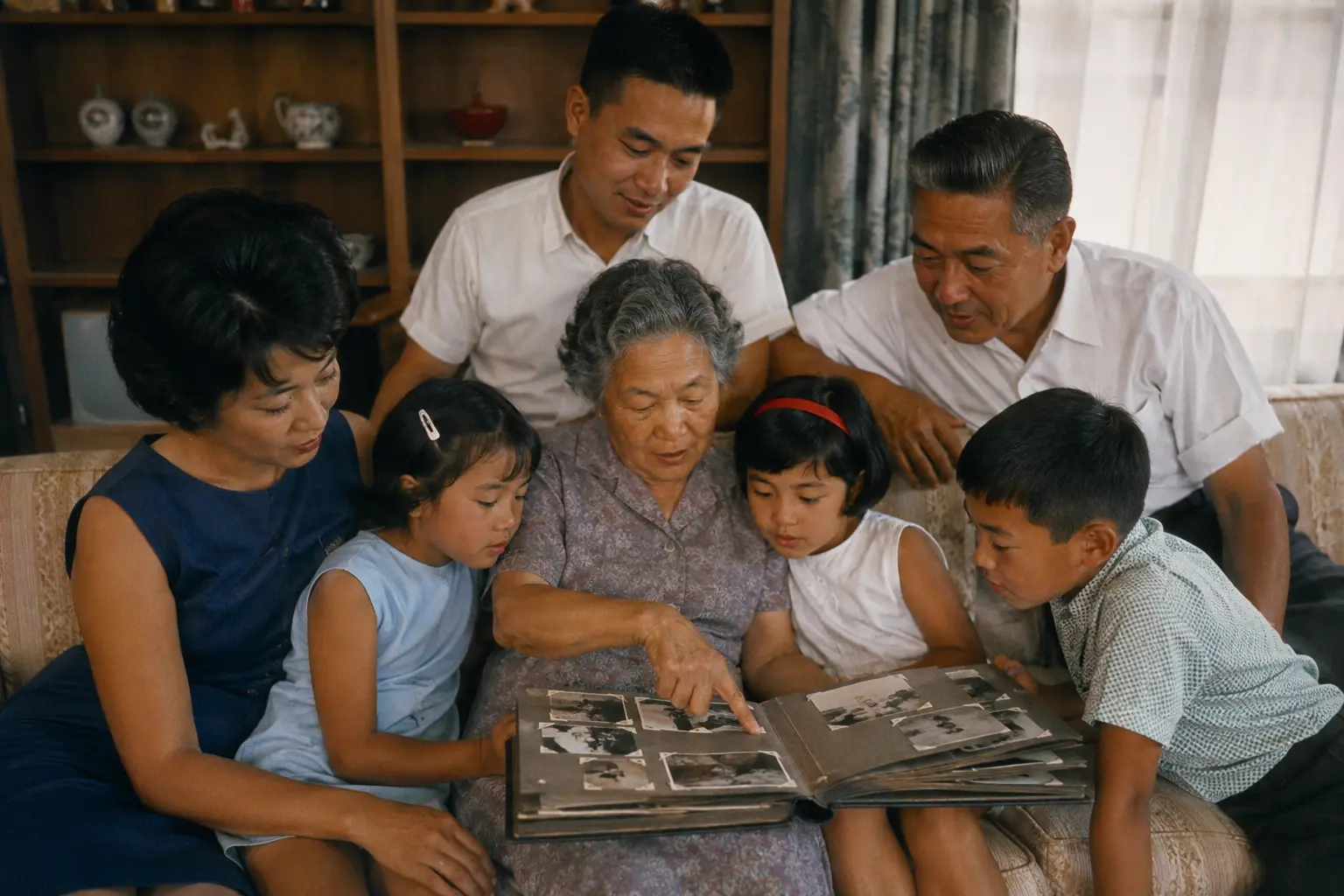
A life arranged by hand
Photographs entered albums through corner mounts, adhesive pages, sleeves, or methods improvised at the kitchen table. Someone decided order and emphasis. A single portrait might occupy a page; several snapshots could crowd together. Handwritten captions fixed names, dates, jokes, and spellings in the voice of the person doing the arranging.
The album was selective by necessity. Film cost money, prints were limited, and not every event had a photographer. Important people might appear rarely because they held the camera. Ordinary days sometimes survived by accident while major occasions disappeared entirely. The record was incomplete, but it was intimate.
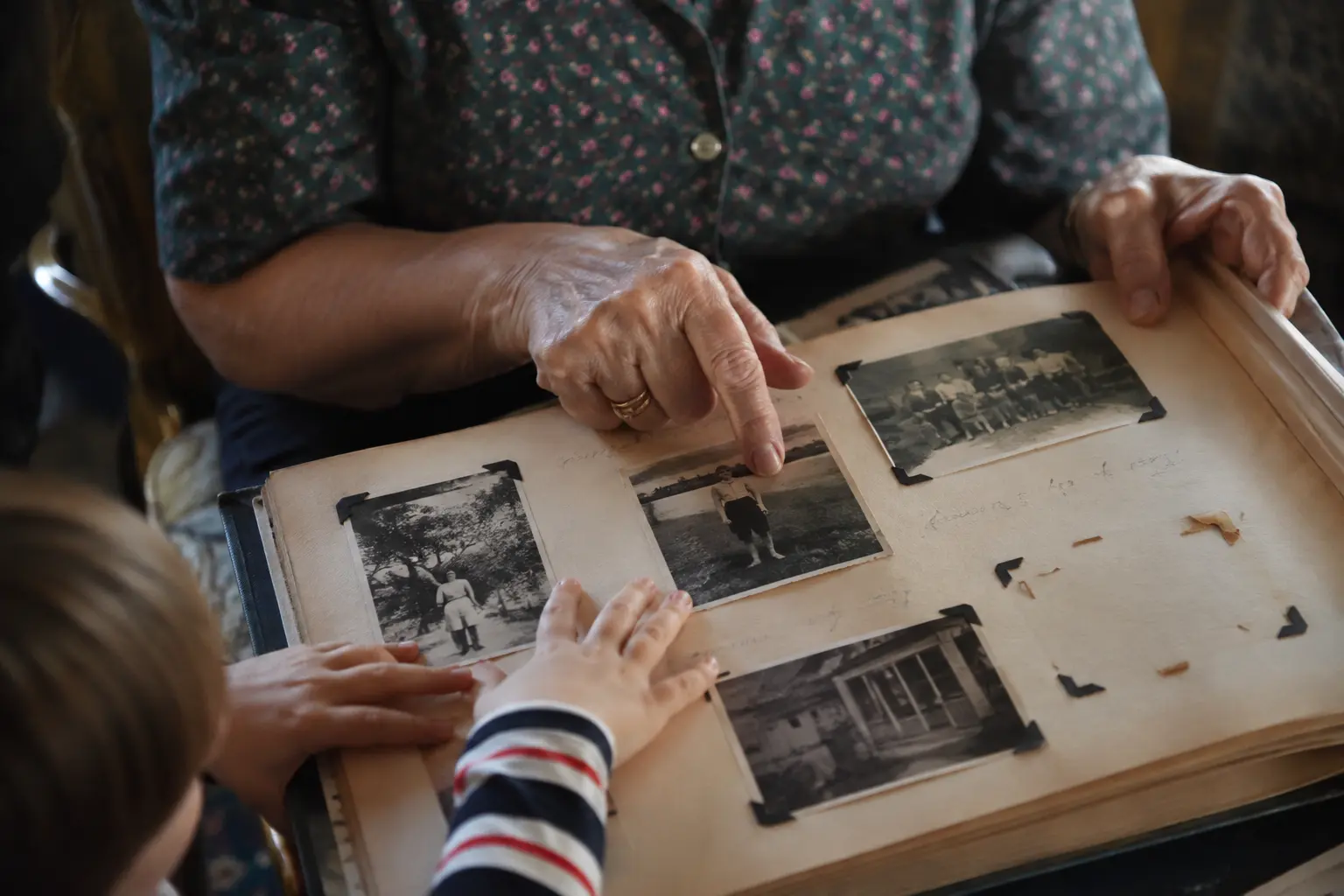
The story changed with the storyteller
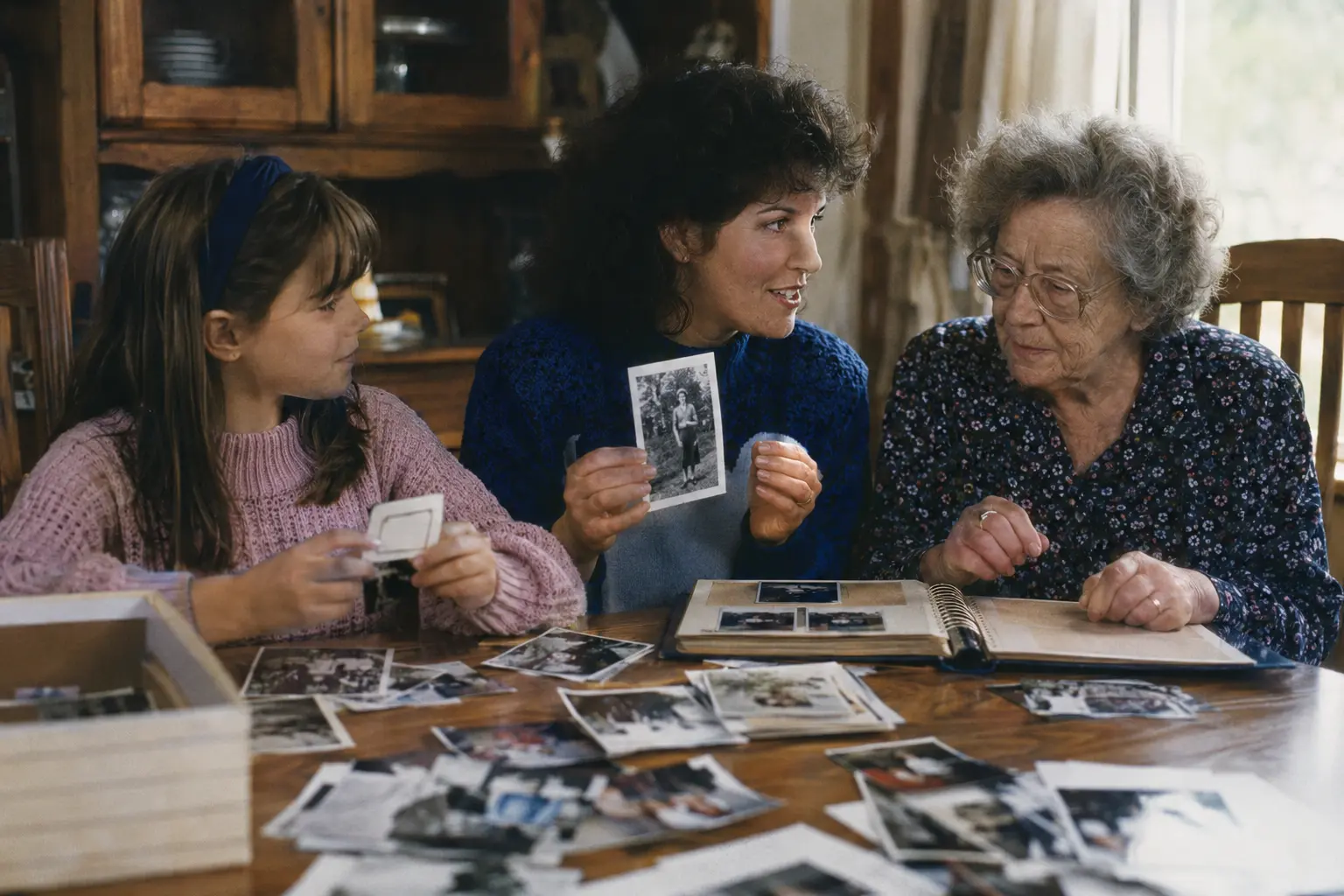
Looking at photographs was a performance shared across generations. One relative emphasized the funny part; another corrected the date. Children learned family relationships by pointing and asking. A picture that seemed plain gained meaning through repetition until its story became inseparable from the image.
Contradictions also surfaced. Memories differed, names went missing, and a child eventually noticed that adults had edited certain subjects. Albums preserve evidence, but they do not settle every question. Their silences can reveal the boundaries of what a family was prepared to say.
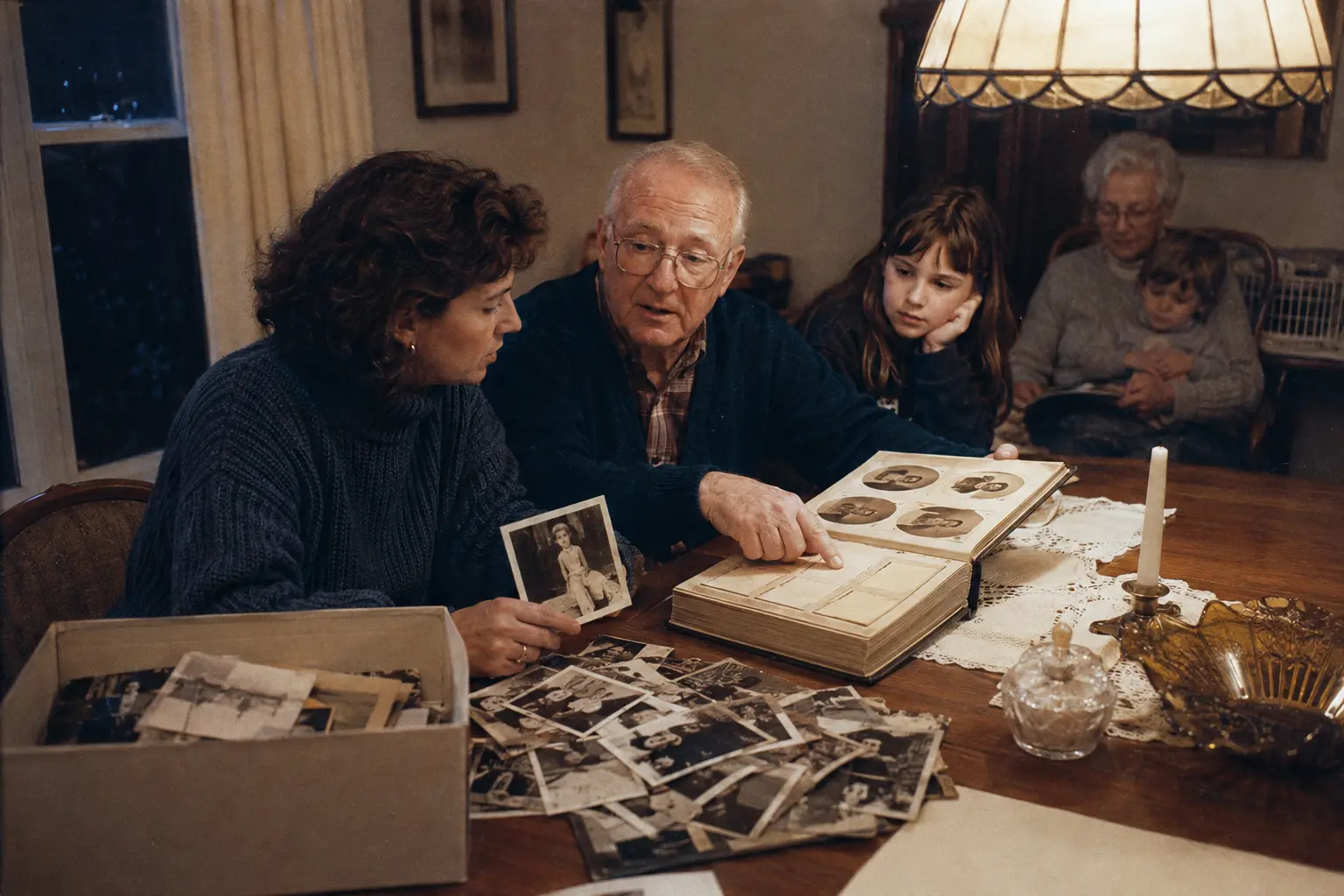
The photograph held the faces; the person beside you supplied the part the camera could not record.
Empty corners and loose prints
Over time, pictures were removed for school projects, memorials, frames, or relatives who promised to return them. Empty mounts remained like punctuation. A loose print might slide from between pages and introduce a face no one expected to see.
Digital archives can preserve far more, share instantly, and recover from copies. The physical album offers a different encounter. Everyone turns the same page. Fingerprints join older fingerprints. The object ages beside the family, holding photographs, gaps, captions, and the continuing work of remembering together.
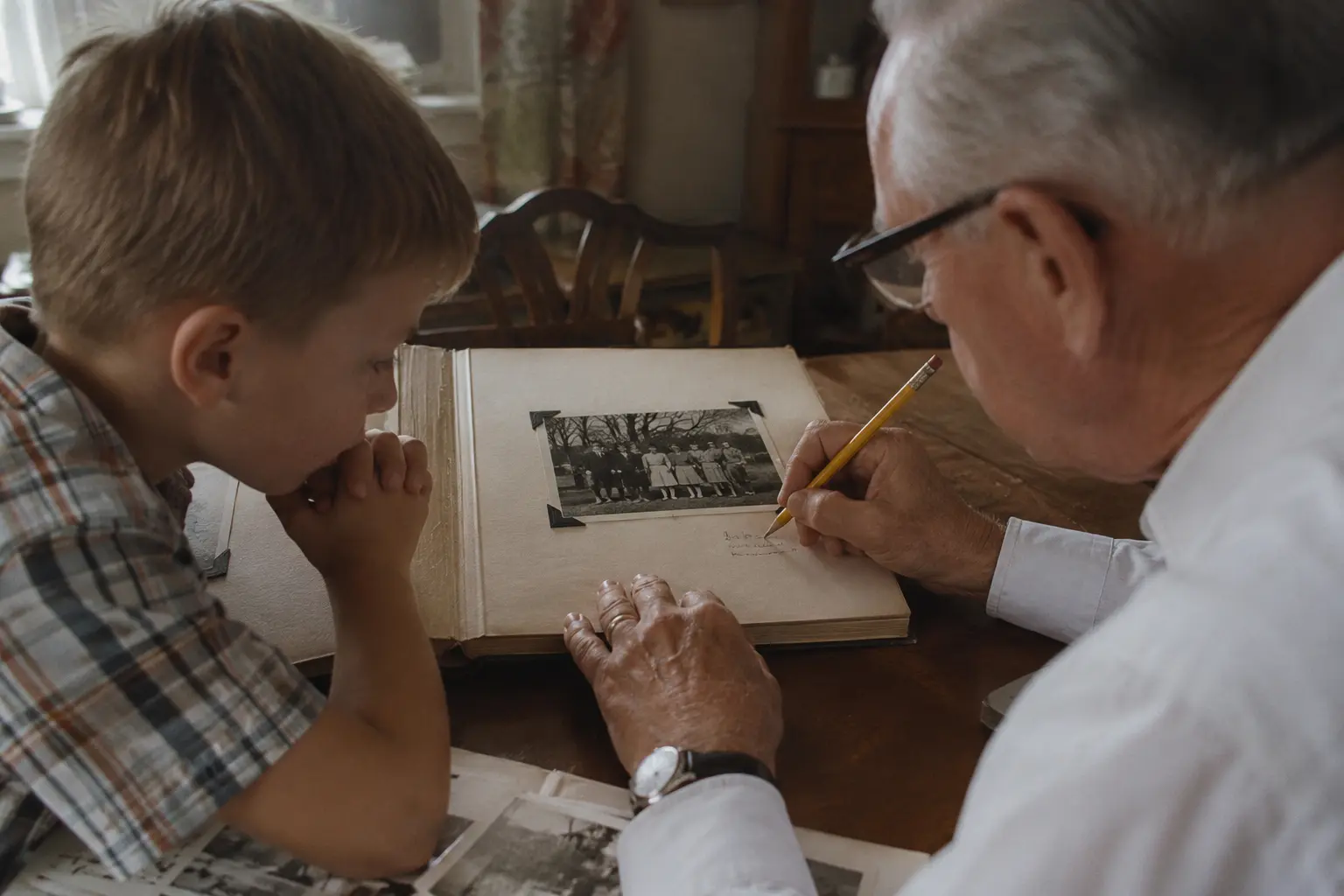
The album needed a storyteller
A photograph rarely explained itself. Someone had to identify the porch, name the cousin at the edge, or describe what happened just after the shutter clicked. The album became most complete when an older relative sat beside a younger one and supplied the story between the frames.
Empty corners created their own questions. A print may have been mailed to a relative, moved into a frame, or simply slipped free. Its absence could make the surviving caption more valuable. Digital collections can hold thousands of images, but the old album made each placement—and each gap—feel intentional, even when it was not.
Saving the names before they disappeared
An album can outlive the people who understood it. Without names, dates, and relationships, a familiar family scene slowly becomes a group of strangers. The most valuable preservation work may be simple: sitting with someone who remembers, asking one careful question at a time, and recording clues without forcing certainty where memory has faded.
The conversation matters as much as the notation. A name can open a story about a house, a journey, or a relative who rarely appeared in photographs. Younger family members receive more than organized pictures; they learn how lives connect. The album stops being a container on a shelf and becomes an active exchange between generations.
A practical way to open the album again
Begin with one page rather than attempting the entire family archive. Record names exactly as they are remembered, note alternate spellings, and separate known facts from family interpretation. A phone recording of the conversation can preserve voice and hesitation, while a written index helps the next reader find people later.
The process should leave space for difficult or missing stories. An empty corner may never be solved, and one person’s version may differ from another’s. Preserving those limits is part of responsible memory work. The album becomes stronger when it carries both what the family knows and what it is still trying to understand.
Who kept your family albums, and which photograph or empty space always started a story?
Library of Congress Prints & Photographs · National Museum of American History Collections
This story is an original cultural-memory essay. Details varied across families, communities, and regions.