Laundry Day on the Backyard Clothesline
Sheets became sails, clothespins filled an apron pocket, and the weather joined the household schedule.
On laundry day, the backyard became another room of the house. Shirts, towels, work clothes, and sheets crossed the open air in careful rows. From a distance, the line looked almost festive. Up close, it showed the weight of the week and the patient work required to make everything ready again.
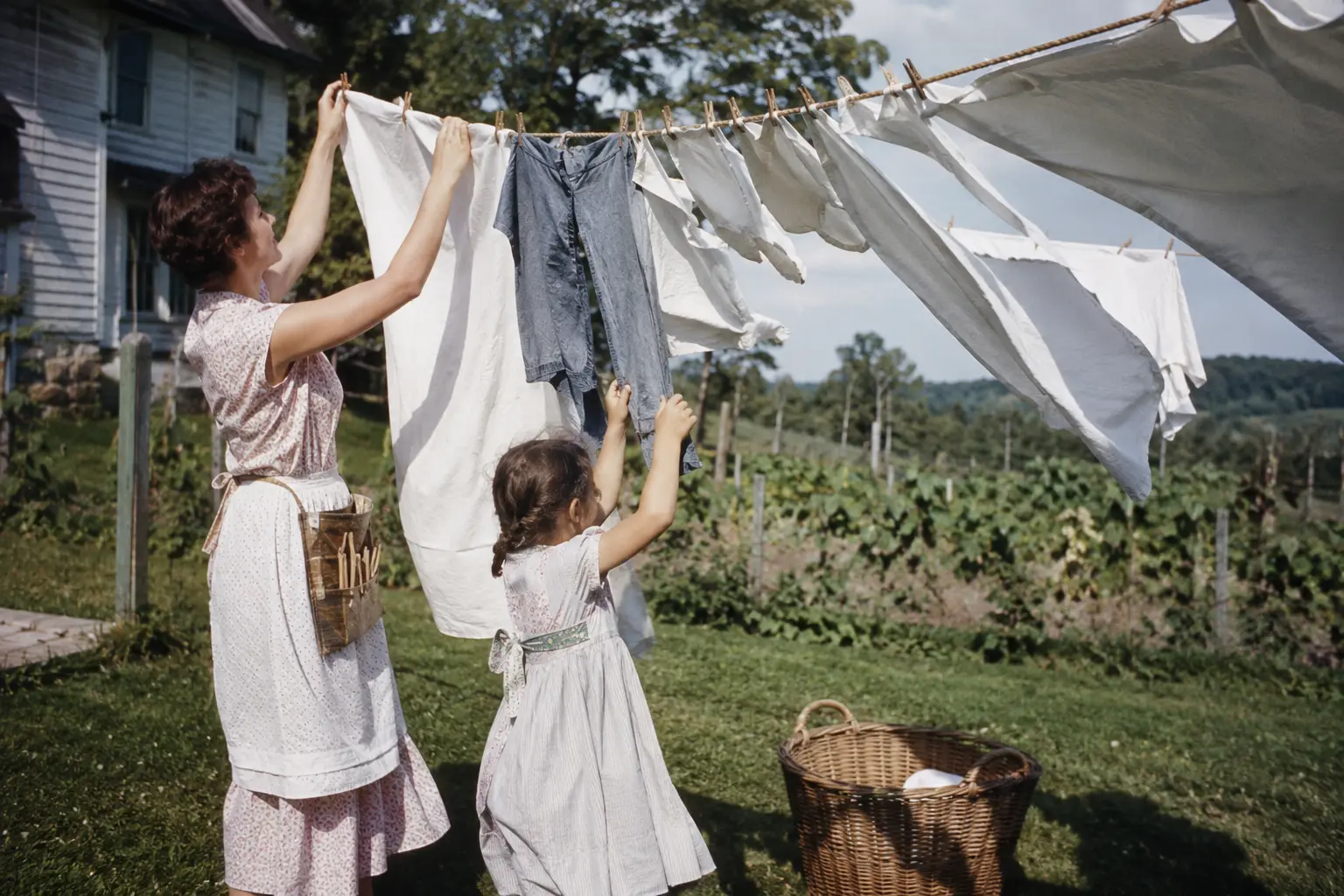
Work measured in pins and weather
The routine depended on conditions no appliance could control. A clear morning offered promise; a dark cloud changed the plan. Clothespins waited in a bag or apron pocket, wooden and smooth from handling. Each piece was lifted, shaken, and fastened with enough space for the wind to move through it.
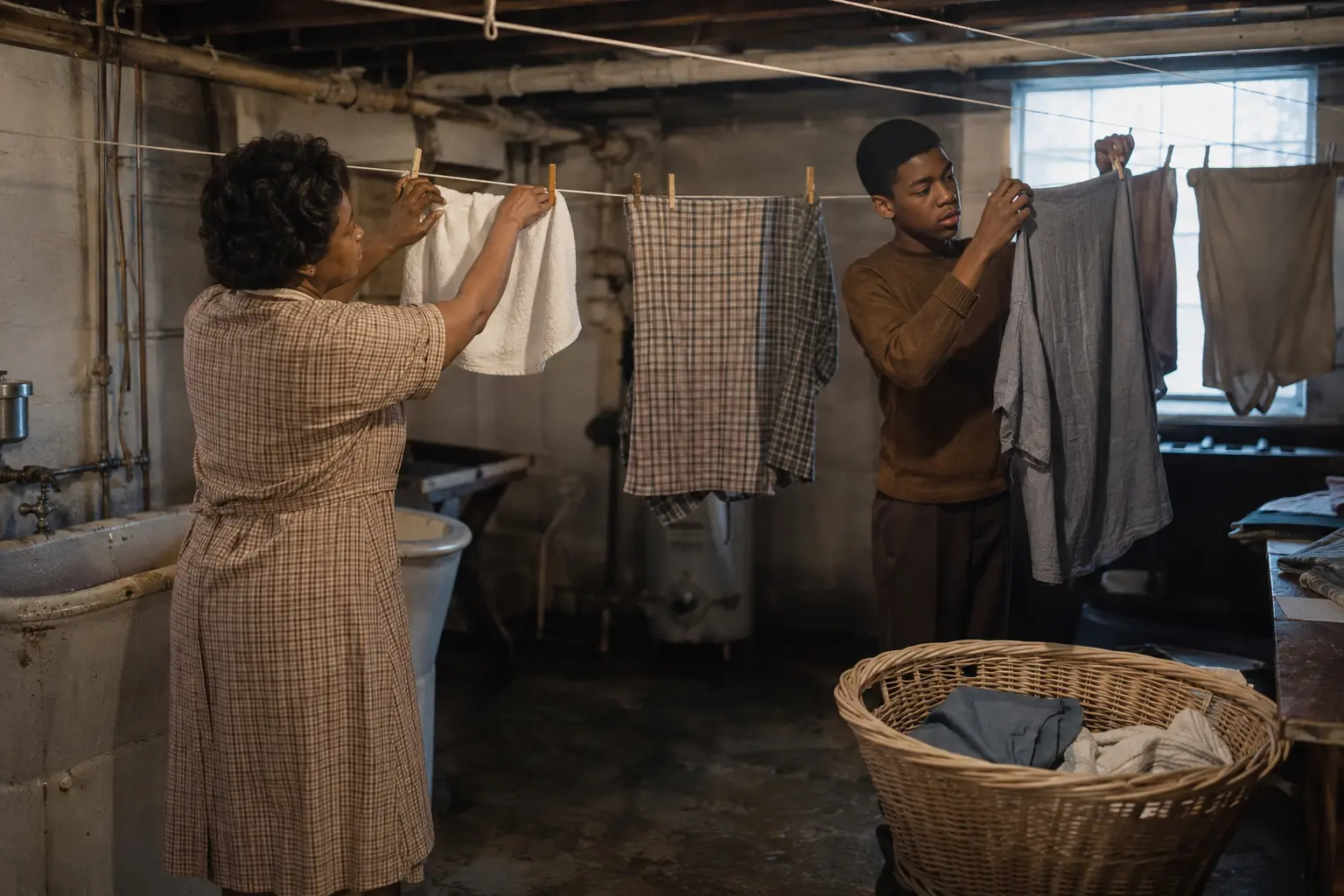
There were practical decisions hidden in the display. Heavy items needed stronger placement. Delicates might stay out of harsh sun. Neighbors and passersby could see what had been washed, so some households arranged the line with an instinct for privacy. Laundry was domestic work, but outdoors it became public in a modest, everyday way.
A landscape made of sheets
For children, a line of sheets could transform the yard. The fabric snapped overhead, softened sunlight, and created temporary corridors that smelled of soap. Running between them was usually discouraged and often irresistible. For a few minutes, an ordinary chore built a white-walled world that moved with every breeze.
The senses made the memory durable: the small bite of a pin against a finger, the roughness of a sun-dried towel, and the warm clean scent of cotton carried inside. In cold weather, fabric could stiffen dramatically. In humid weather, the whole process seemed to wait. The day’s forecast became part of household management.
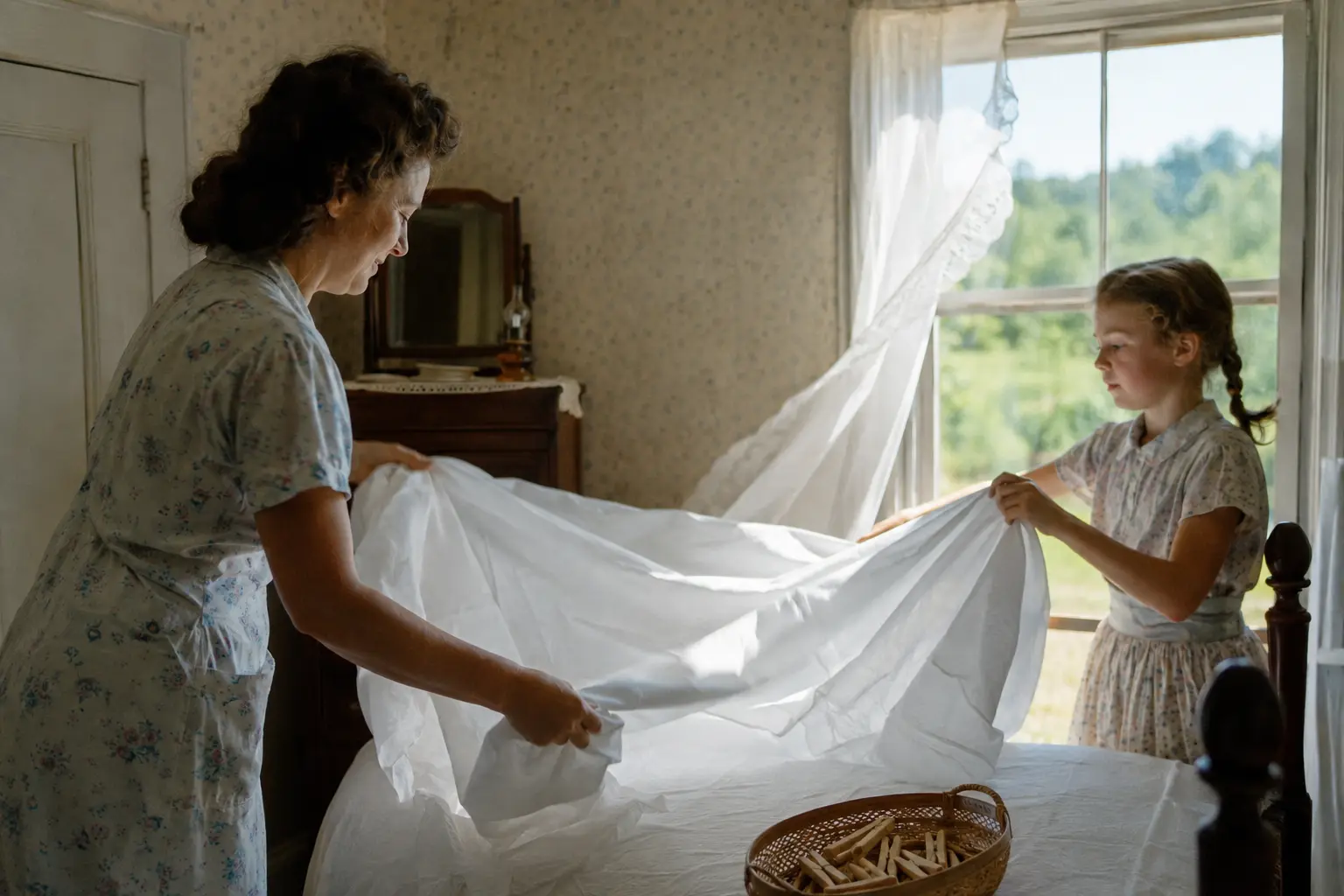
The line held ordinary clothes, but together they described every person living inside the house.
The line as a family record
A clothesline revealed the household without showing a face. Tiny socks appeared, then larger ones. School shirts gave way to work shirts. A patched towel stayed in service for years. Week after week, the same line recorded growth, wear, and care in a language of fabric.
Dryers brought undeniable convenience and freed families from weather and lifting. Still, many people remember the satisfaction of folding something the sun had finished. The clothesline linked effort to result in a way that was visible across the yard: an empty basket at one end of the day and a full, clean one at the other.
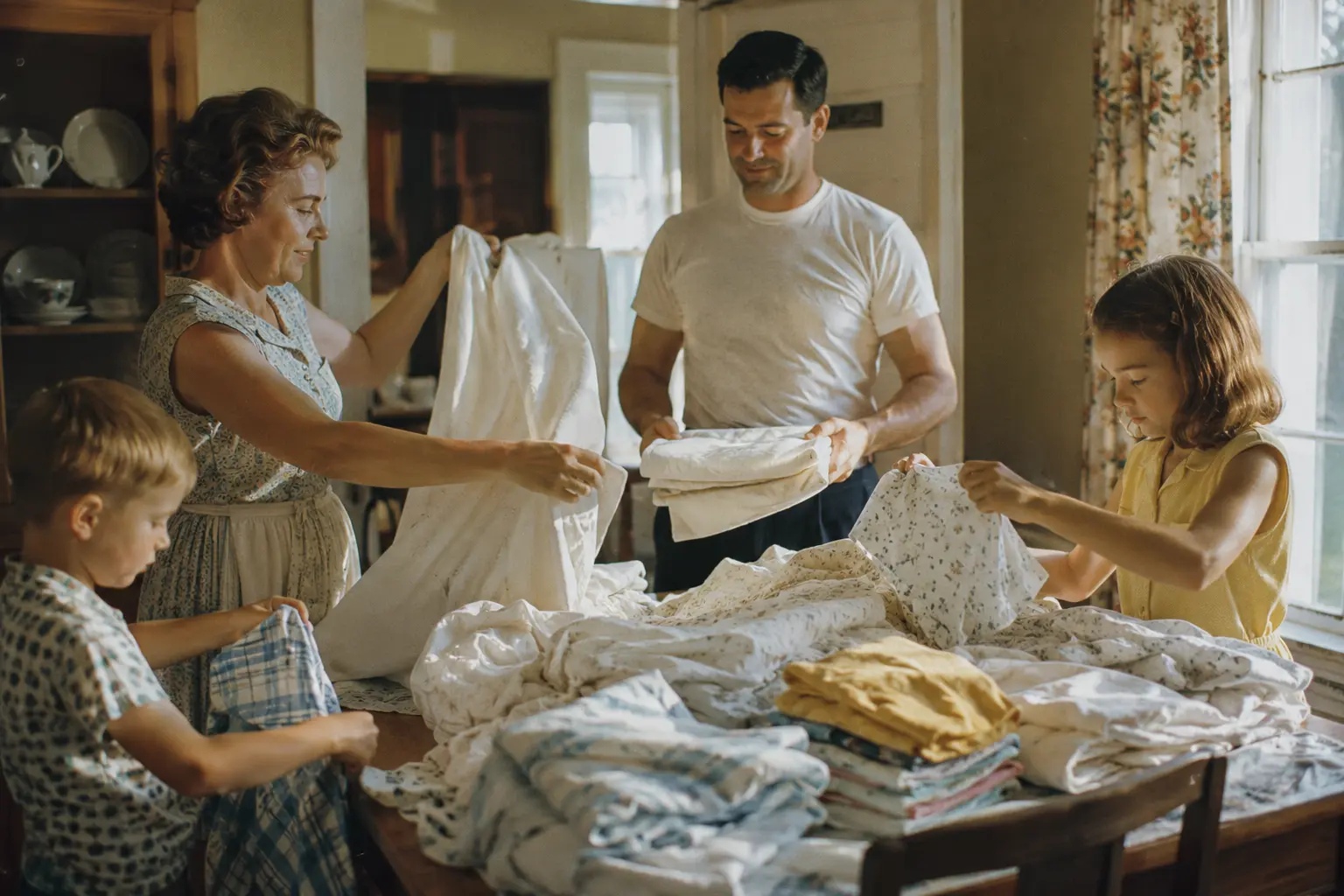
When weather joined the household schedule
A clothesline made the sky part of the laundry routine. A clear morning offered a chance to wash the largest pieces, while a sudden wind could twist shirts around the line or send a clothespin into the grass. The work required lifting, reaching, watching, and starting over when the forecast proved wrong.
It also placed private family life in plain view. Baby clothes, work shirts, school uniforms, and Sunday linens told a quiet story from one end of the line to the other. Neighbors could see that a household was growing, preparing for winter, or simply catching up after rain. The line was practical, but it was also a moving portrait of the people indoors.
Work that disappeared when it was done
A successful laundry day removed its own evidence. Stains faded, baskets emptied, and folded clothes returned to drawers. What remained invisible was the lifting, sorting, weather watching, and repeated walking between the house and yard. Like much domestic labor, the task was most noticeable when it had not been completed.
Remembering the clothesline means remembering that unseen effort without pretending the work was easy. Convenience changed households for good reason. Still, the outdoor ritual connected labor to weather and family life in a visible way. Each row showed what had been cared for, and every empty line at evening marked a job carried all the way through.
What an old laundry photograph cannot show
A still image captures sheets in the wind but not their weight when wet, the repeated reach toward the line, or the decision to wash one more load before the weather changed. Those missing physical details explain why the scene felt different to the person doing the work and the child playing nearby.
When a family photograph includes a clothesline, it is worth asking who washed the clothes, who helped carry them, and what happened when rain came. The answers restore labor and personality to a picture that might otherwise look merely picturesque.
Did your family use a backyard or basement clothesline, and what did laundry day smell like to you?
Library of Congress Prints & Photographs · National Museum of American History Collections
This story is an original cultural-memory essay. Details varied across families, communities, and regions.