Record Players, Album Covers, and Choosing the Next Song
Listening began before the needle dropped, with a shelf, a cover, and a choice everyone in the room could see.
Playing a record began with choosing an object. A hand moved along the shelf, paused at familiar spines, and pulled one cover into the room. Before a note sounded, the artwork, liner notes, and track list announced an atmosphere. The listener had already committed to more than a passing song.
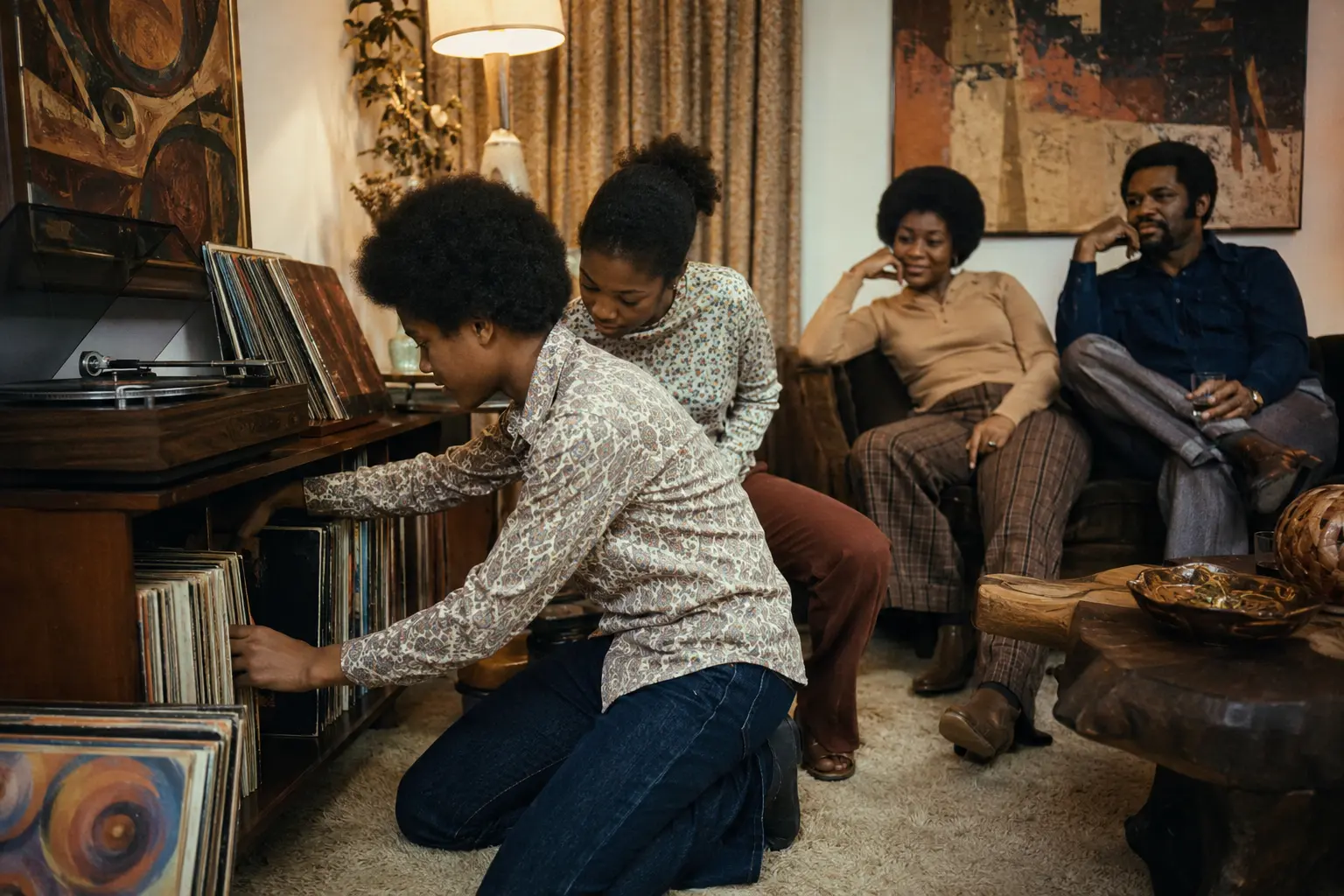
Music required a sequence of gestures
The record slid carefully from its inner sleeve. Fingers avoided the grooves. Dust might be brushed away before the disc met the turntable and the tonearm moved toward its edge. Lowering the needle asked for a steady hand. A soft crackle opened the space before the music arrived.
Equipment differed widely, from portable players to carefully assembled stereo systems. Each setup had its own instructions and weaknesses. Speakers needed placement, needles wore down, and a footstep on the wrong floorboard could interrupt the performance. Listening included tending the machine.
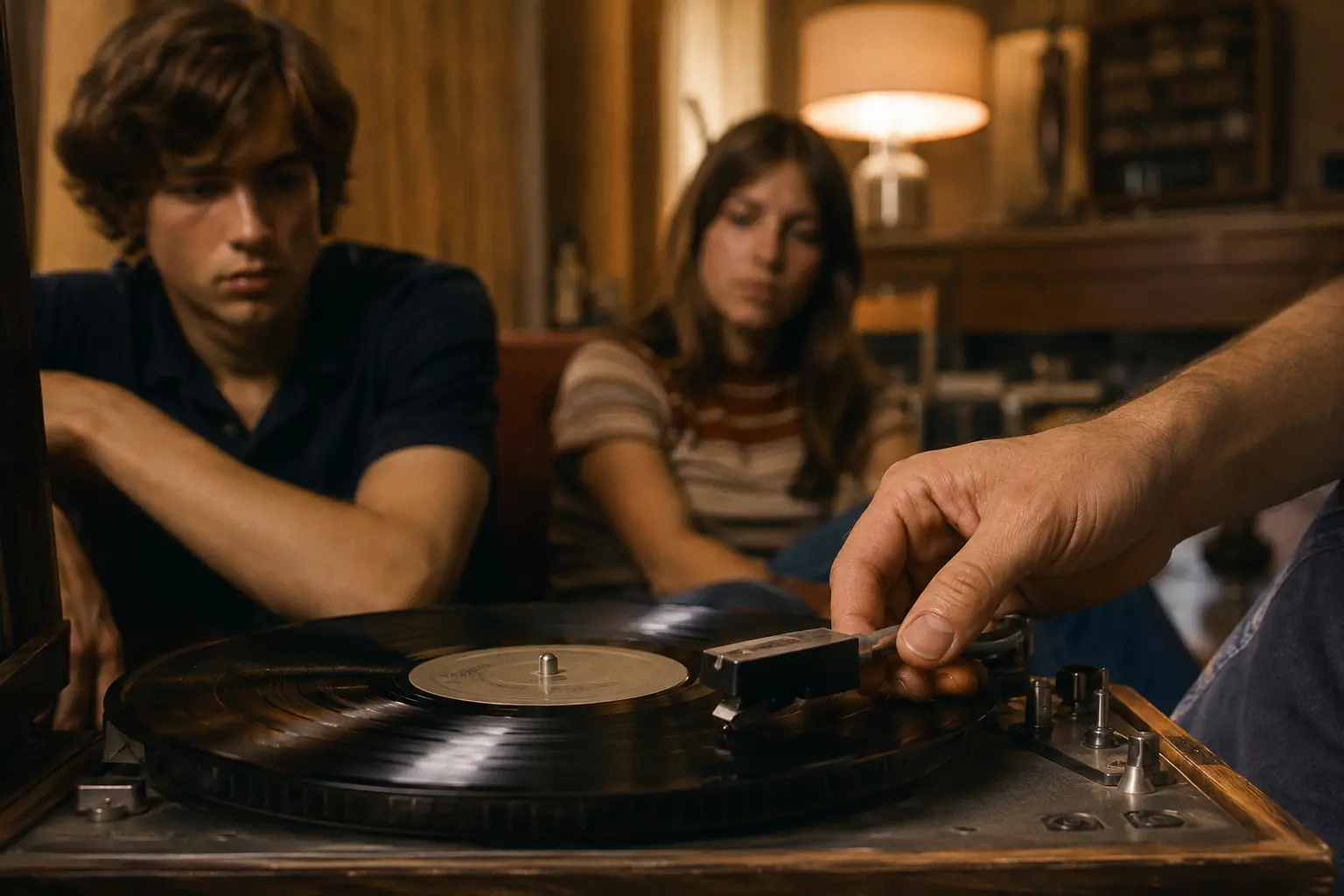
The album made music visible
A cover was large enough to study. Lyrics, credits, photographs, and design gave the sound a visual home. While the record played, the object moved among listeners. Details were read aloud, names learned, and favorite images connected permanently to certain songs.
Choosing the album also revealed taste. At a gathering, the person near the turntable carried social responsibility: match the mood, satisfy a request, or take a chance on something unexpected. Everyone could recognize the selection before hearing it. There was no invisible queue.
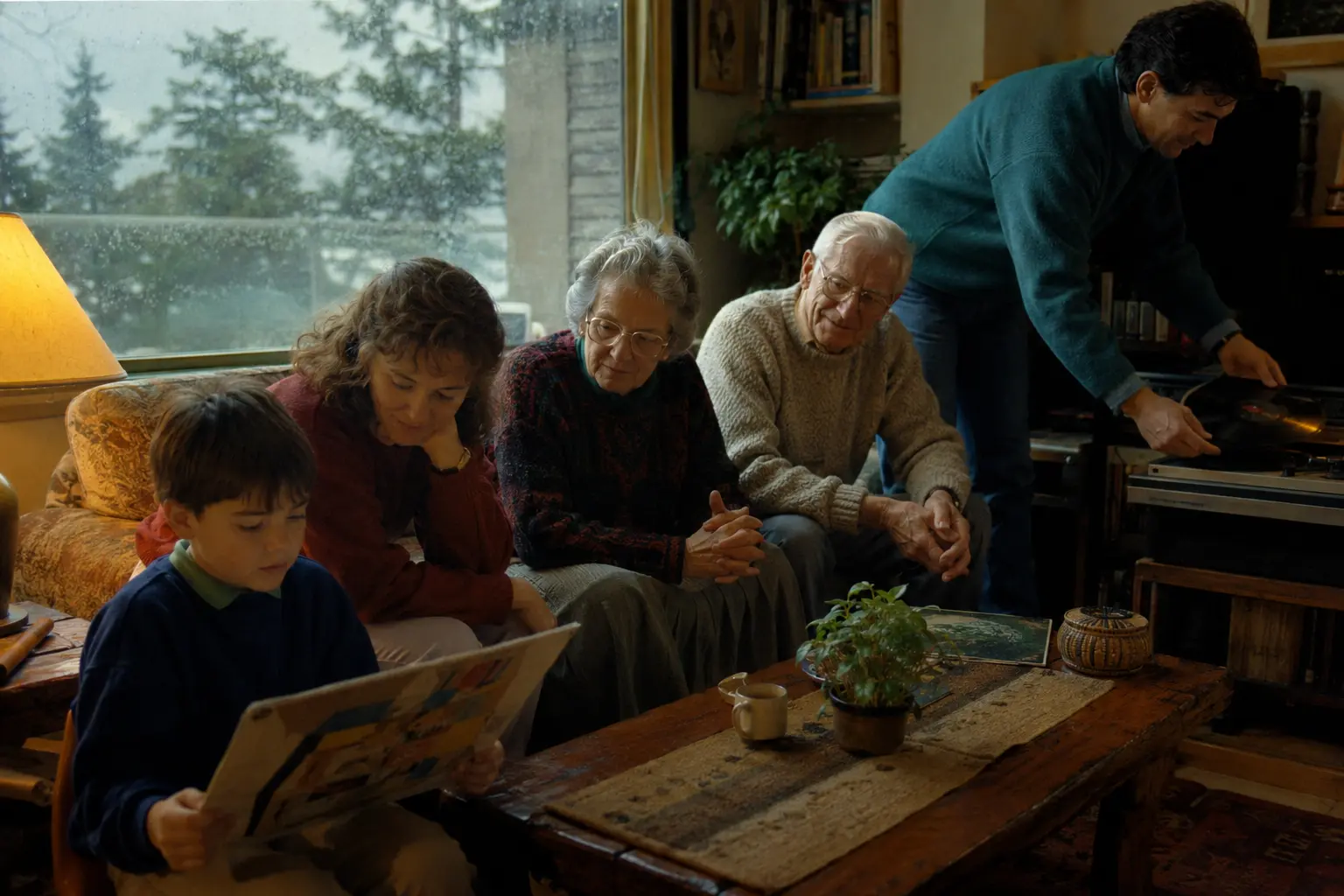
The pause between sides was not dead air. It was the sound of someone getting up to keep the evening going.
Attention shaped by two sides
A record side eventually ended. Silence returned until someone stood, turned the disc, or chose another. That interruption created a natural point for conversation and made continued listening an active decision. The album had architecture, and the listener traveled through it in order more often than not.
Digital music offers access earlier generations could hardly imagine. The record ritual offered something access alone cannot guarantee: attention gathered around a physical choice. The shelf showed a musical life, worn covers showed devotion, and the next song began with someone crossing the room.
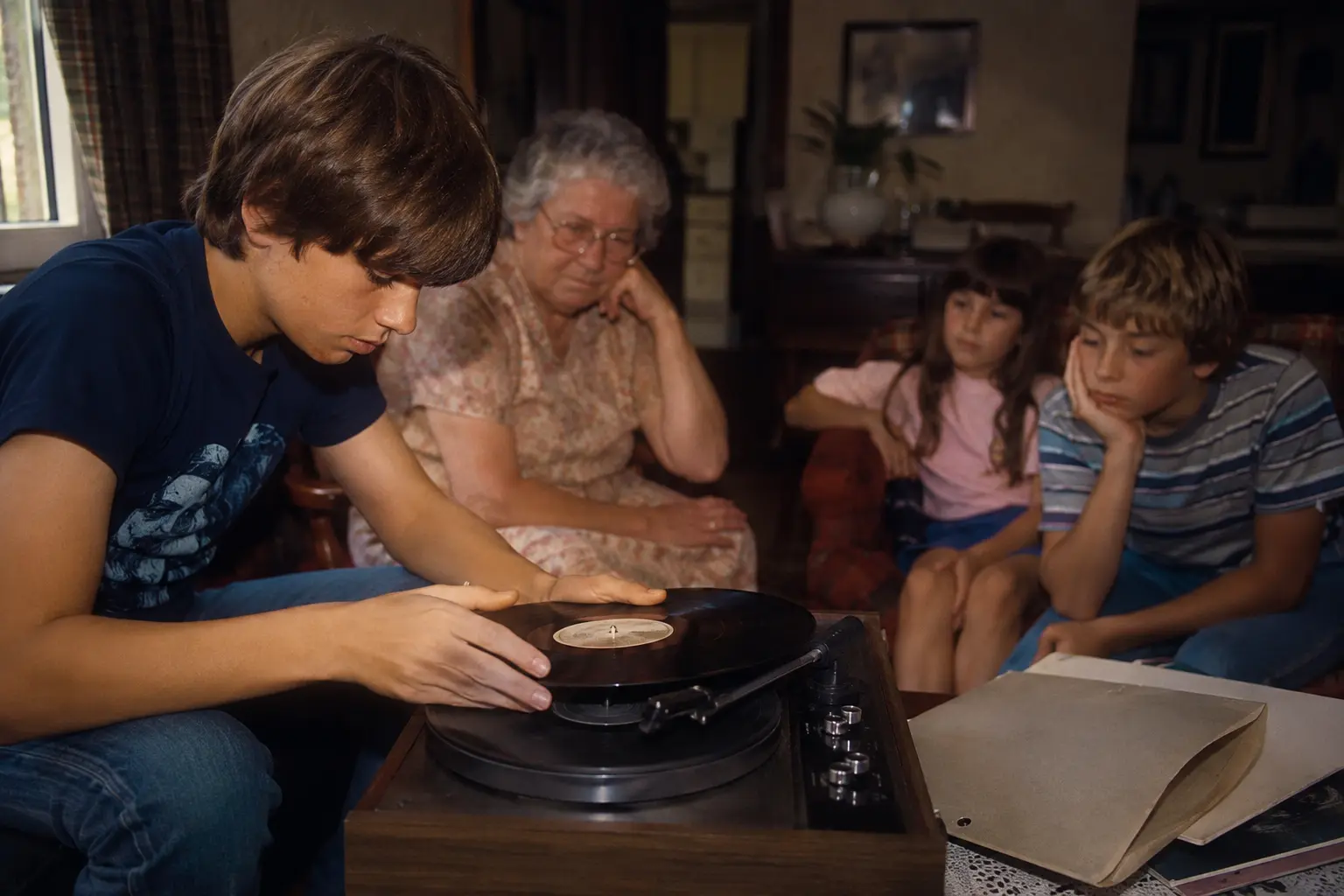
Listening occupied the whole room
Playing a record asked for small acts of attention. Someone chose an album, removed it without touching the grooves, cleaned away dust, and lowered the needle. The sequence slowed the moment just enough to make listening feel deliberate rather than automatic.
Album covers stayed in view while the music played. They were read, studied, passed around, and sometimes used to explain an artist or a memory to someone younger. A song could still be private, but the machine made it physical and shared. Even silence between sides had a purpose: somebody had to stand up and continue the evening.
Music became a map between generations
A record shelf allowed people to see another person’s history in physical form. Older albums carried one set of memories; newer purchases challenged the room with unfamiliar sounds. Choosing what to play could invite a story, start an argument, or reveal an unexpected point of connection between people separated by decades.
The exchange worked in both directions. A younger listener might hear an older favorite with new attention, while an adult discovered why one current record mattered so much. The turntable did not guarantee agreement. It simply kept everyone within the same listening space long enough for taste to become conversation.
What the physical ritual added
The value of the record ritual was not that every listener paid perfect attention. People talked, read, cleaned, and drifted in and out of the room. The physical steps simply created shared reference points: the cover being chosen, the first crackle, the end of a side, and the question of what should play next.
That kind of listening can still be recreated without pretending one format is morally superior. Choose an album together, leave its artwork visible, and resist skipping for a while. The useful inheritance is not the machine itself. It is making music large enough to belong to the room and everyone inside it.
Which album cover can you still picture clearly, and who usually chose the records in your house?
Library of Congress Prints & Photographs · National Museum of American History Collections
This story is an original cultural-memory essay. Details varied across families, communities, and regions.