Christmas Morning with a Camera That Used Film
Every click cost a frame, every flash changed the room, and no one knew the picture until much later.
On Christmas morning, the family camera appeared with a sense of responsibility. Film offered only so many frames. Someone checked the counter, adjusted the distance, and asked everyone to hold still while the moment continued impatiently around them. The picture would be taken now, but no one could inspect it yet.
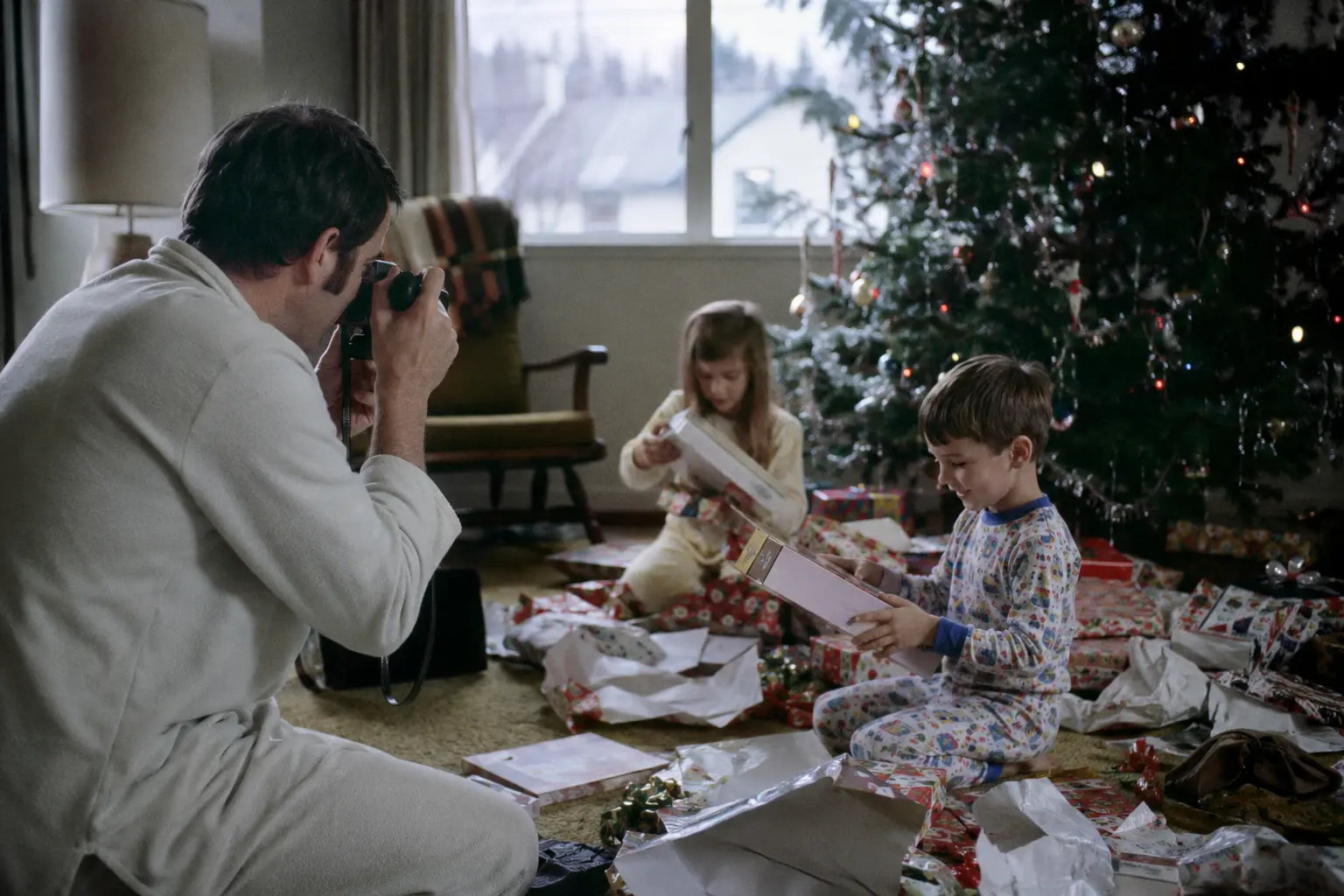
Choosing which moments became pictures
Limited film made selection part of the ritual. A child beside the tree, the grandparents arriving, siblings holding a shared gift—these scenes earned a frame. Smaller moments might go unrecorded, living only in memory. The person behind the camera had to anticipate rather than react endlessly.
Indoor light presented its own challenge. Flash bulbs or cubes could brighten the room with a startling burst, leaving expressions somewhere between surprise and patience. Red eyes, motion blur, and a thumb near the lens waited invisibly inside the camera. There was no second attempt unless someone suspected trouble.
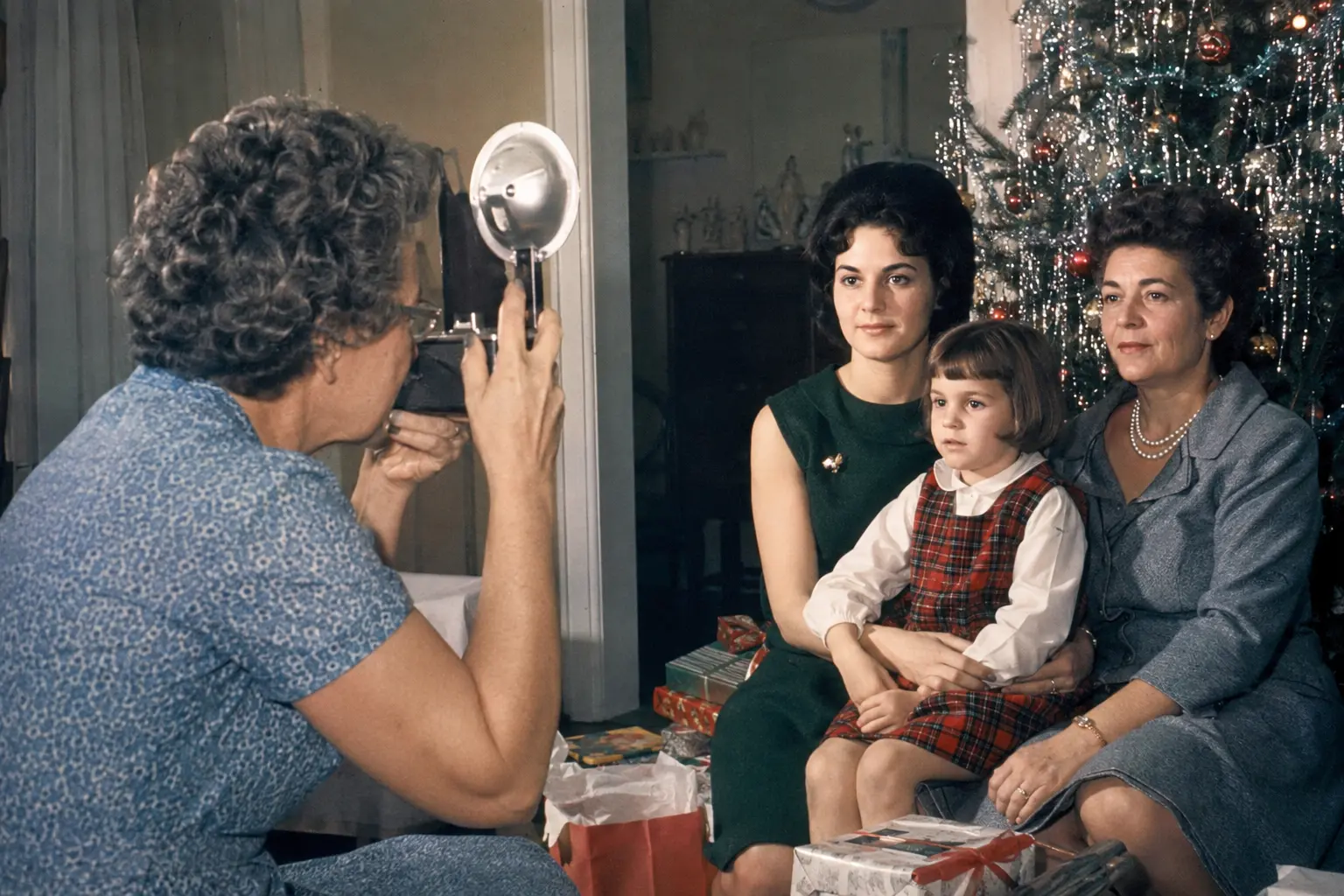
The photographer inside the family
One person often appeared less frequently because that person was taking the pictures. Their point of view shaped the album: what they considered important, when they called for a pose, and whose laughter they tried to catch. The family archive carries the presence of this unseen observer in every frame.
Children learned to cooperate briefly, then returned to the morning. Adults arranged wrapping paper, moved a lamp, or asked for one picture before a gift was opened. Photography interrupted the event, but it also declared that this ordinary room and these particular people were worth saving.
The camera missed many perfect moments, but its imperfect frames became the family’s evidence that the morning happened.
The second Christmas at the photo counter
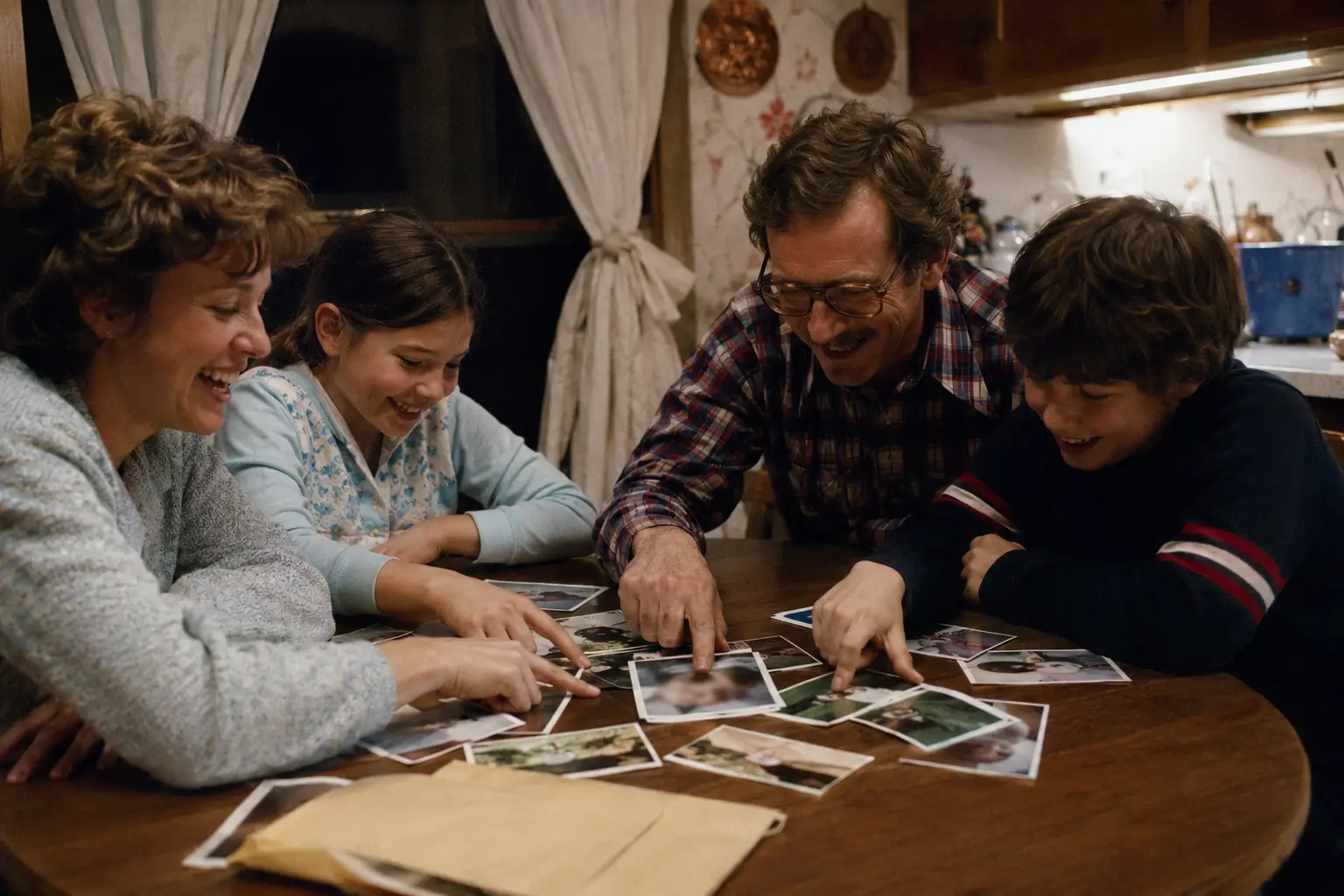
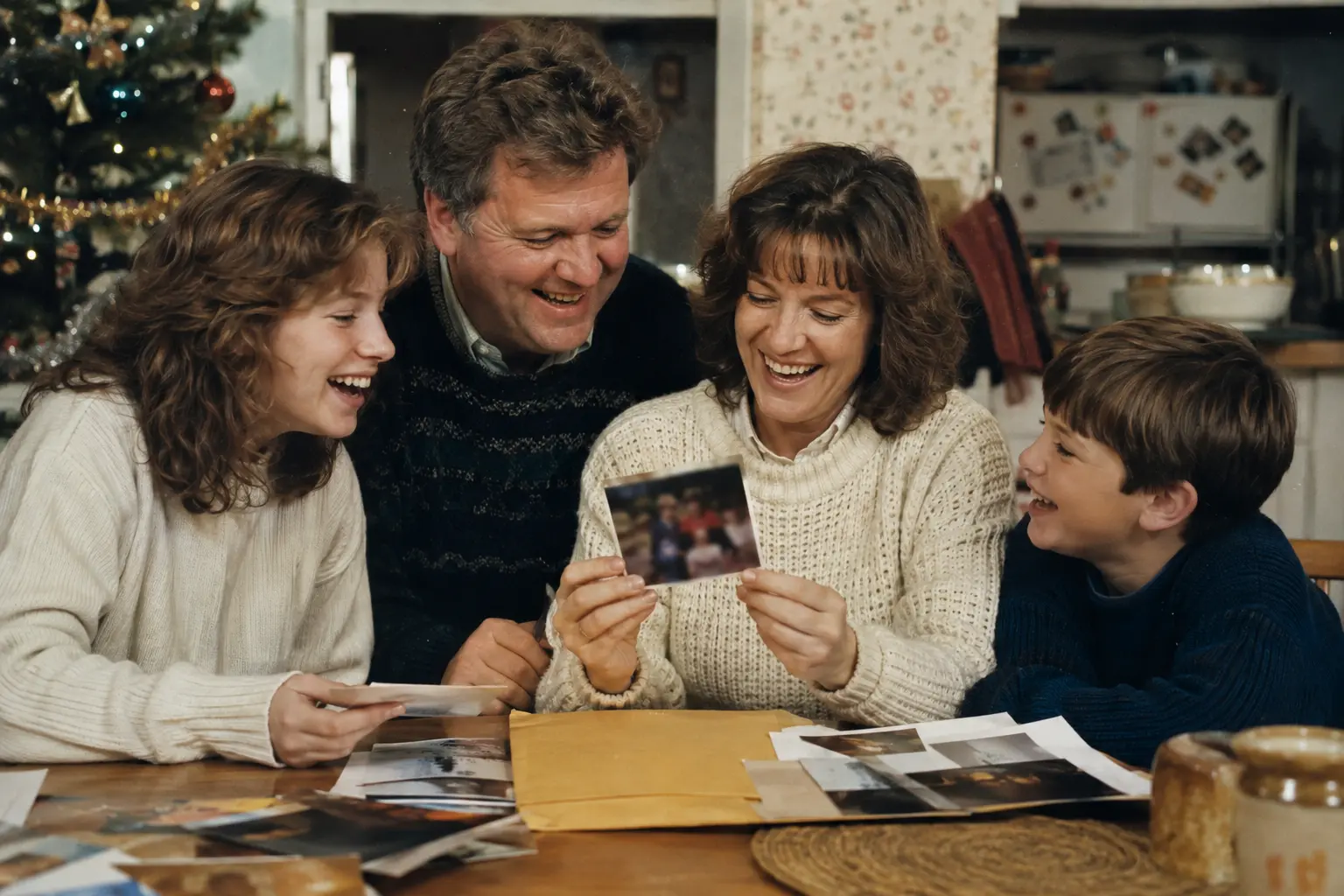
Days or weeks later, developed prints brought the morning back in a small envelope. The family passed them around and discovered what the camera had actually seen. A perfect expression could rescue a crooked composition; a blurred image might become beloved because no better version existed.
Digital photography gives families extraordinary abundance and security. Film created a different rhythm: act, wait, discover. The delay separated the celebration from its evidence and offered a quiet second opening, when everyone gathered around a stack of glossy rectangles and chose which ones belonged in the album.
The holiday returned days later
The roll might remain in the camera until every frame was used, then travel to a lab or store counter for processing. By the time the envelope came home, wrapping paper had been cleared away and daily life had resumed. Opening the prints made Christmas morning happen a second time.
There were surprises no screen had warned about: closed eyes, a finger near the lens, a child moving too quickly, or one accidental picture of the floor. Families kept many of them anyway. Their technical flaws became part of their truth, showing not a perfect holiday but the speed and disorder of people trying to remember it.
Who was missing from the photograph
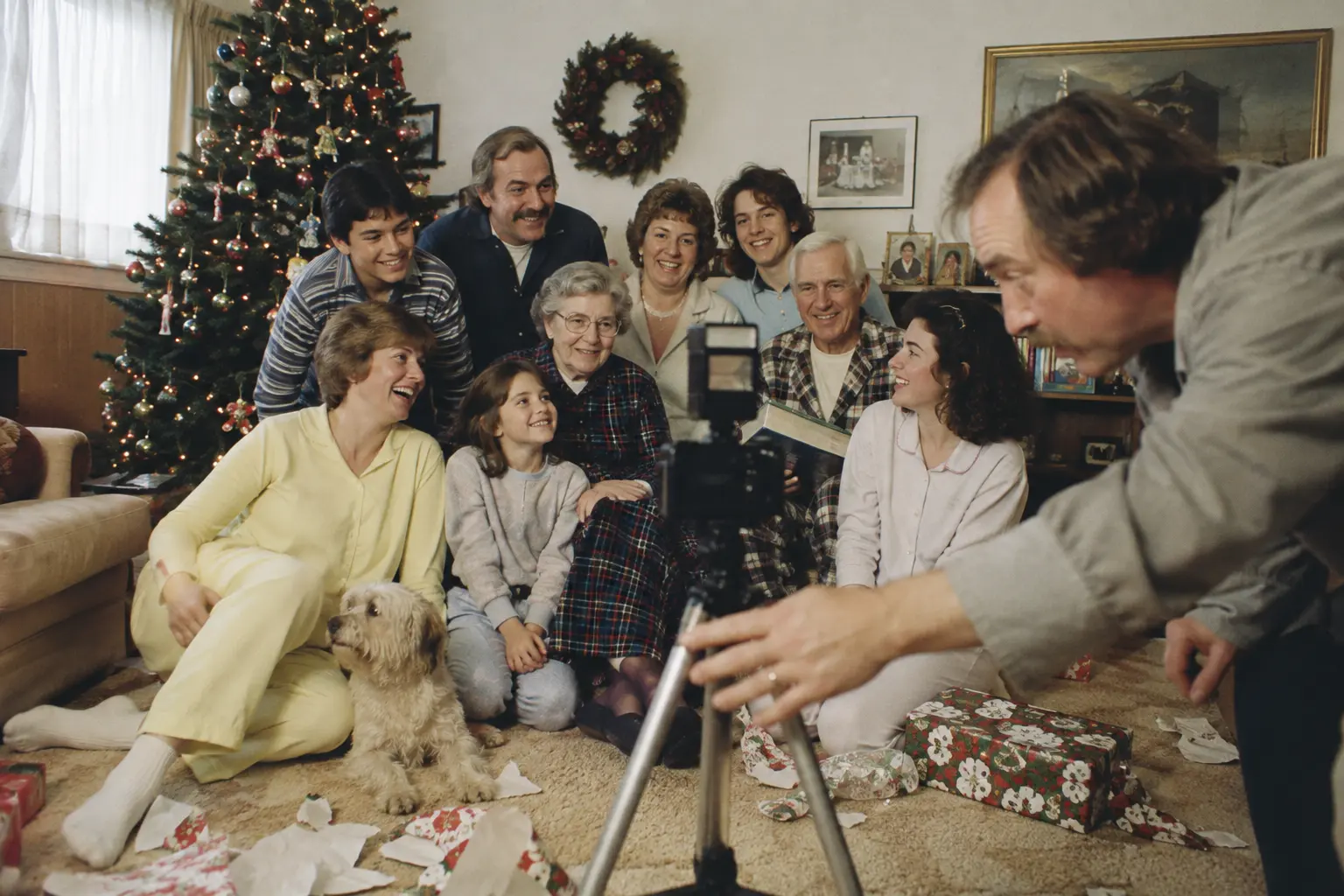
One person was often behind the camera—calling everyone closer, watching the frame count, and deciding when the scene was ready. A self-timer could bring that person into the picture, but it introduced a small race across the room. The resulting photograph might capture someone sitting late, laughing, or still reaching for a place.
Those awkward frames can be especially valuable because they reveal the work of remembering. The photographer was not outside the family story; they were shaping it while trying to join it. When prints returned, the best picture was not always the sharpest. It was the one that included the person whose care was usually visible only from behind the lens.
Give the loose prints their story back
Film photographs often survive in envelopes with little explanation. Before the people who remember them are gone, families can label the year, place, names, and the small event that made the frame meaningful. Uncertainty should remain uncertainty; a question mark is more honest than a confident guess.
The technical mistake should not be the first reason to discard a print. A blurred hand, uneven flash, or face turned away may locate the photograph inside a real family morning. Perfection shows the pose. Imperfection often shows the life happening around it.
Who took the Christmas pictures in your family, and which imperfect photo became a favorite?
Library of Congress Prints & Photographs · National Museum of American History Collections
This story is an original cultural-memory essay. Details varied across families, communities, and regions.