Halloween Costumes Made at the Kitchen Table
Cardboard, old sheets, safety pins, and one determined parent turned an idea into a neighborhood legend.
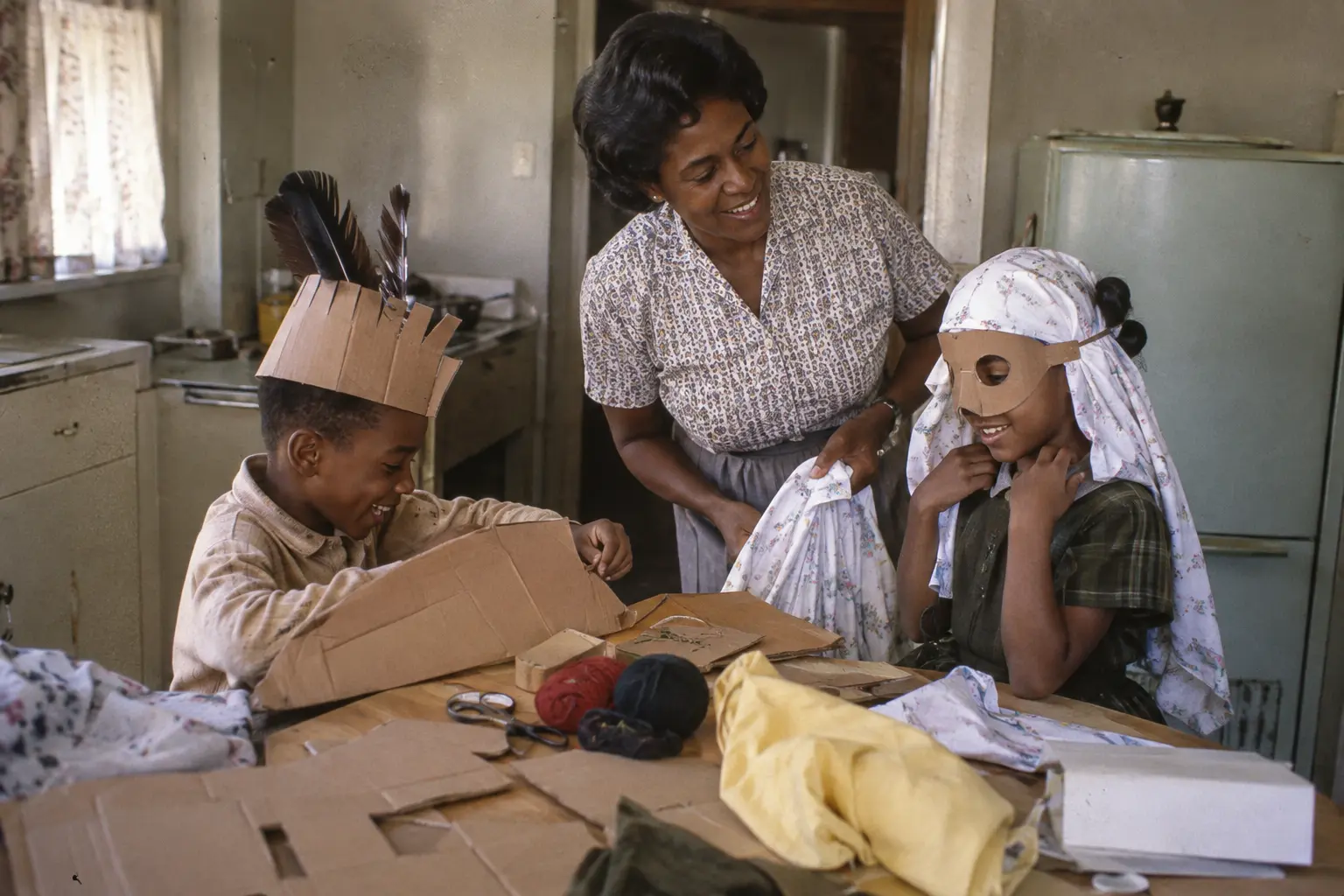
A homemade Halloween costume often began with a confident idea and an uncertain pile of materials. Cardboard leaned against a chair. An old sheet waited for eyeholes. A parent opened the sewing basket, someone searched for tape, and the kitchen table became a workshop where imagination had to cooperate with whatever the house already contained.
The design changed as it became real
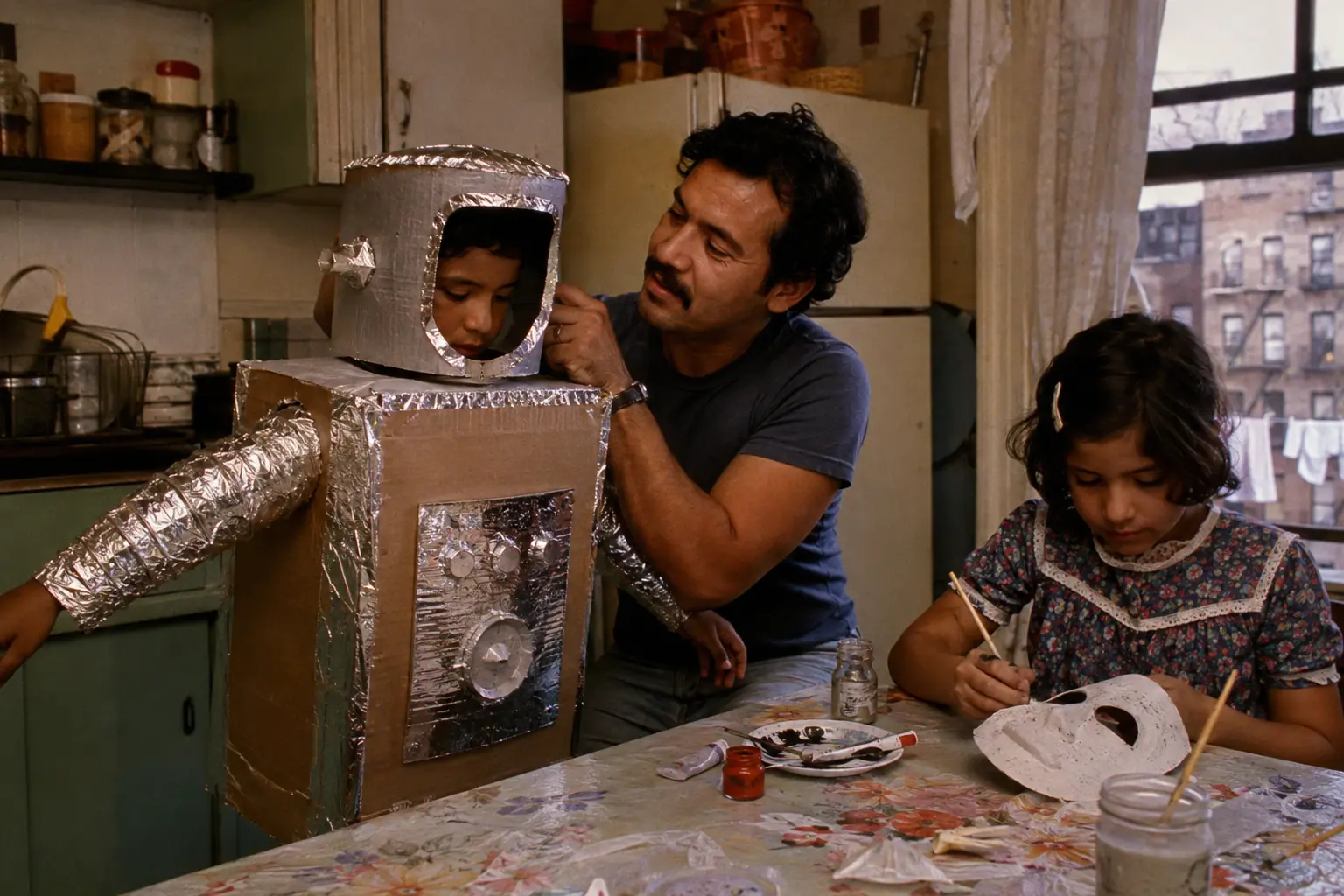
Children usually pictured the finished costume more clearly than they understood its construction. A robot needed arms that could bend. A crown had to survive the wind. A mask required sight and breathing, details that appeared only after the first fitting. Each problem produced a practical revision and, sometimes, a completely new character.
Materials carried earlier lives. A shirt from the back of a closet became a pirate’s coat. A paper grocery bag turned into a helmet. Foil, yarn, makeup, and safety pins supplied the transformation. The result rarely matched the drawing, but it belonged entirely to the child and the adults who helped.
The neighborhood became the stage
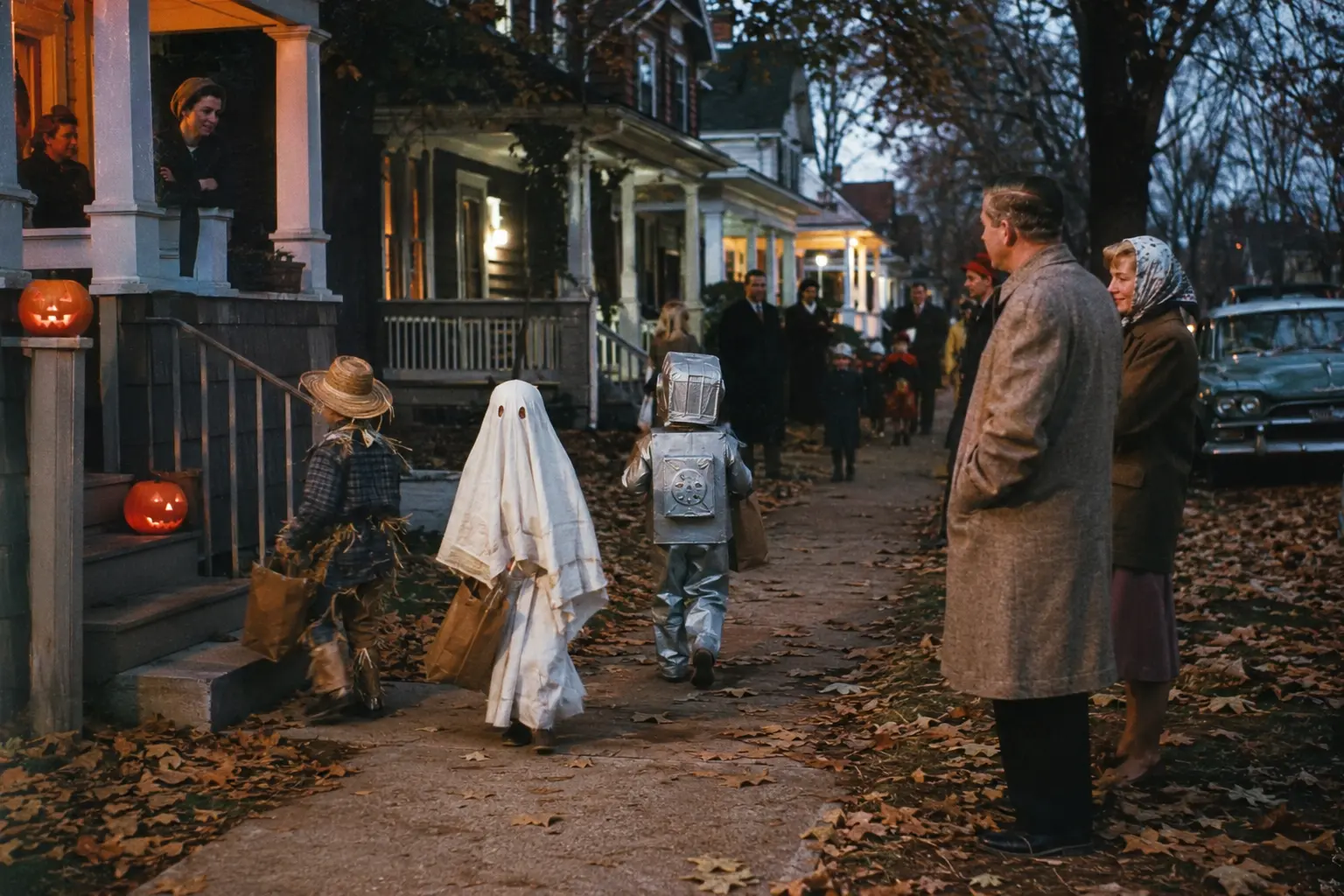
At dusk, the costume met porches, steps, weather, and other children. Delicate parts bent. Tape loosened. A parent made repairs beneath a streetlight or on a stranger’s walkway. Store-bought and handmade costumes mixed freely in a moving parade, each identified by the shout of a friend from behind a mask.
The night tested more than craftsmanship. Children had to walk, carry a bag, remember manners, and decide how close they wanted to come to the scariest house. Familiar streets looked different after dark, and costumes allowed neighbors to become an audience for one evening.
The costume’s flaws were not mistakes to erase; they were proof that somebody had made it for one child.
Why imperfect costumes endure
Commercial costumes offered characters children already loved and saved families valuable time. Homemade versions could be frustrating, especially for adults balancing work, money, and a deadline. Nostalgia should not turn that pressure into a requirement.
Still, the kitchen-table costume remains powerful because its making was part of the holiday. The crooked crown and visible tape recorded cooperation. Years later, a photograph may reveal every flaw, yet the child inside appears completely convinced. For one night, belief did the finishing work.
The costume changed while it was being made
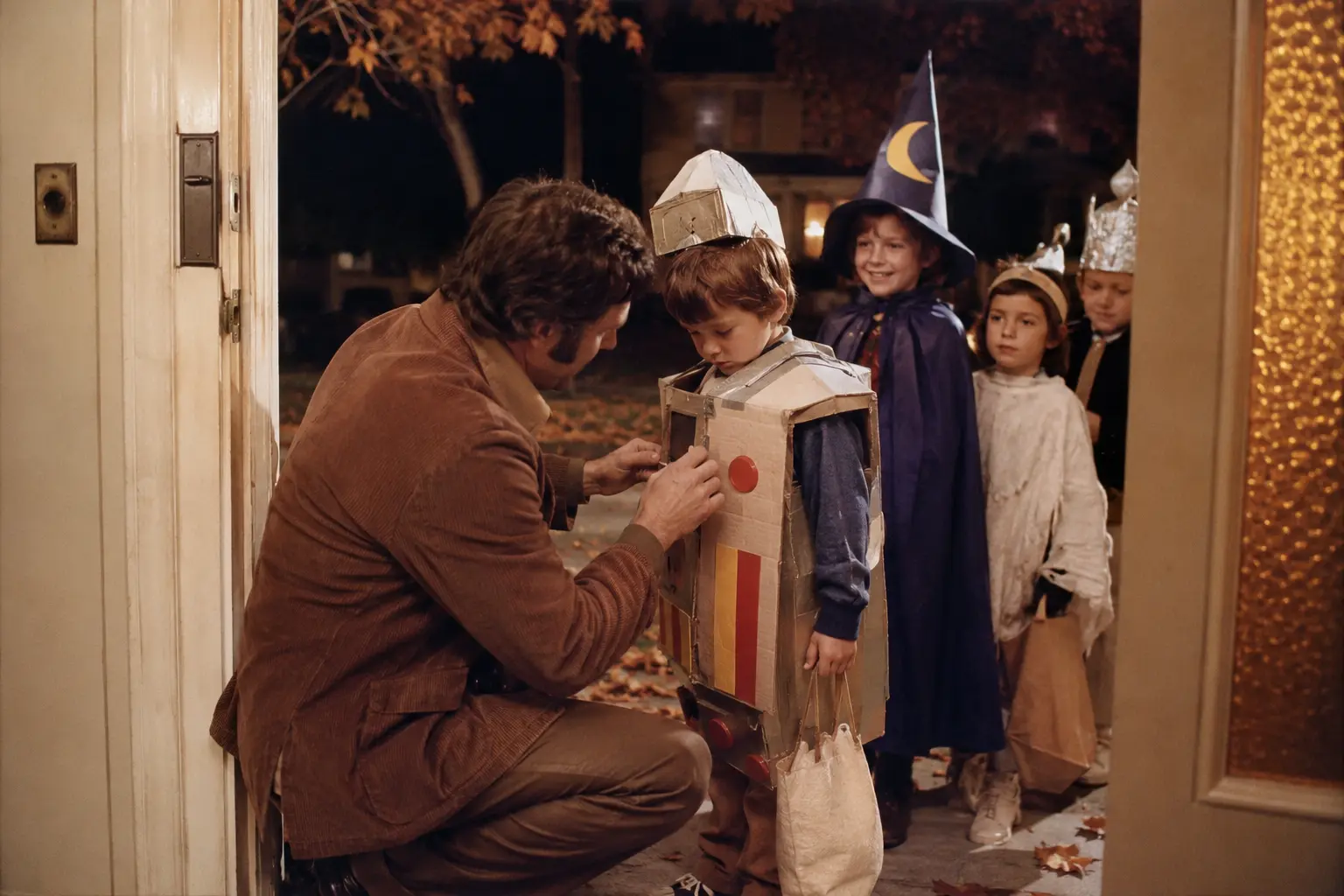
A homemade costume rarely followed the first plan exactly. Cardboard bent, paint dried slowly, and an old garment suggested a better character halfway through. The person building it solved one problem at a time, often with whatever could be found in a drawer, closet, or paper grocery bag.
Those compromises gave the costume personality. A crooked crown or patched cape identified not only the character but also the hands that made it. Children might have envied a polished store-bought outfit for one evening. Decades later, it is often the lopsided creation—and the adult working under the kitchen light—that returns most clearly.
The story continued after the mask came off
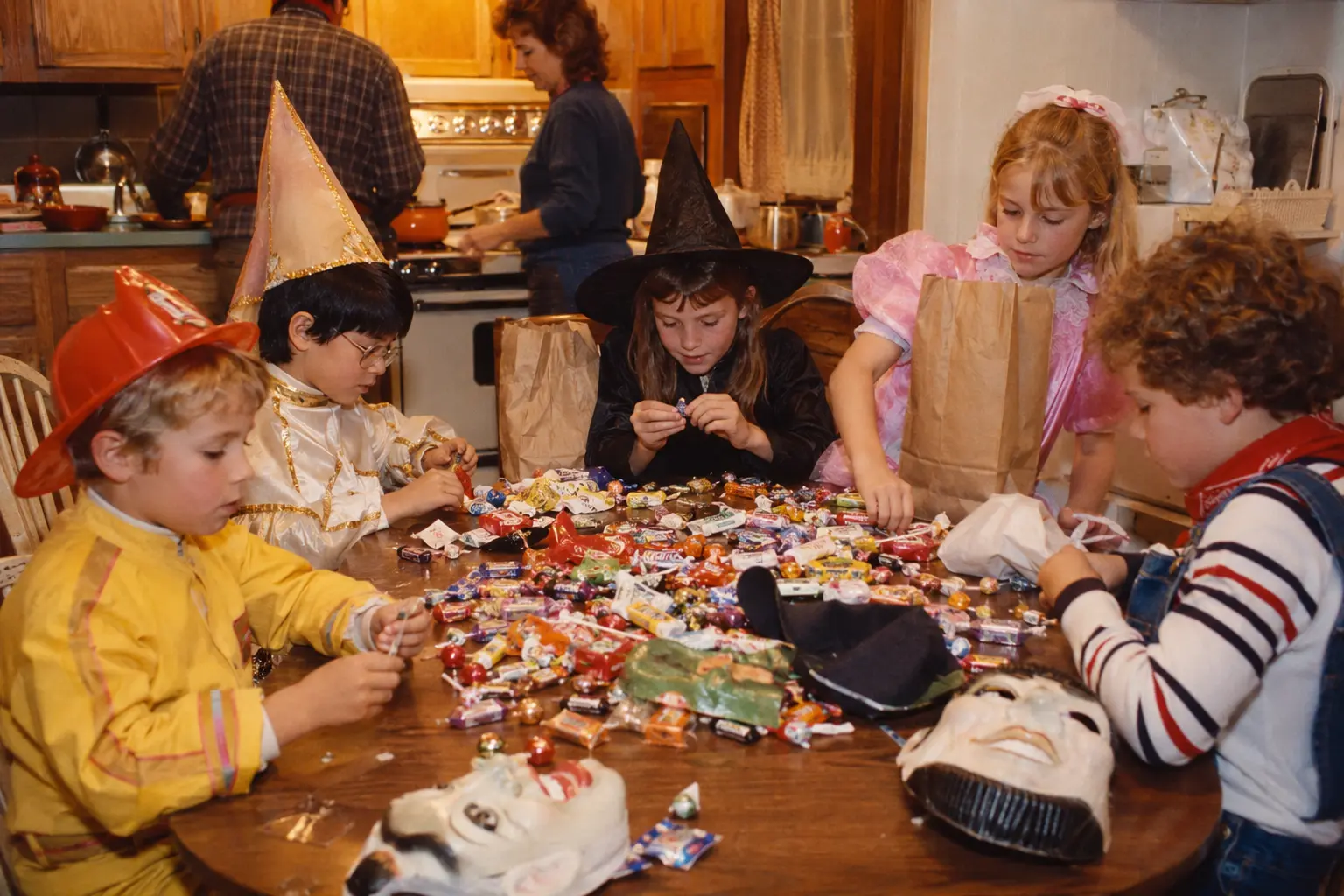
Returning home began another ritual. Paper bags were emptied across the table, masks were pushed aside, and children compared what the neighborhood had offered. Parents checked unfamiliar treats while negotiations began immediately. The costume that had seemed magical outdoors became cardboard, tape, bent fabric, and a tired child under kitchen light.
That transformation is part of the memory. The night did not end with a perfect photograph; it ended with repairs visible, makeup fading, and the handmade character coming apart. Those details make the story human. A costume only had to survive a few hours, yet the effort behind it could remain vivid for decades.
Save the making, not only the costume
A finished costume photograph can hide the most memorable part: the cereal boxes cut apart, the fabric borrowed from another project, and the adult returning to the table after everyone else had gone to bed. Photographing the construction or writing down the improvised solution preserves the collaboration behind the character.
Homemade does not automatically mean better, and purchased costumes created cherished memories too. What gives this particular tradition its power is visible effort. The child remembers becoming somebody else for a night; the maker remembers how close the whole idea came to falling apart.
What costume did your family make from scratch, and which part needed a last-minute repair?
Library of Congress Prints & Photographs · National Museum of American History Collections
This story is an original cultural-memory essay. Details varied across families, communities, and regions.