What Was Inside a 1960s School Lunchbox
Wax paper, a dented thermos, and the small daily surprise packed before the school bus came.
Before lunchtime, the lunchbox was a promise sitting beneath a desk or stacked along a classroom wall. Its latch gave a decisive click. Inside waited a meal packed hours earlier by someone who had tried to imagine what would still taste good after a bus ride, a morning of lessons, and the occasional tumble.
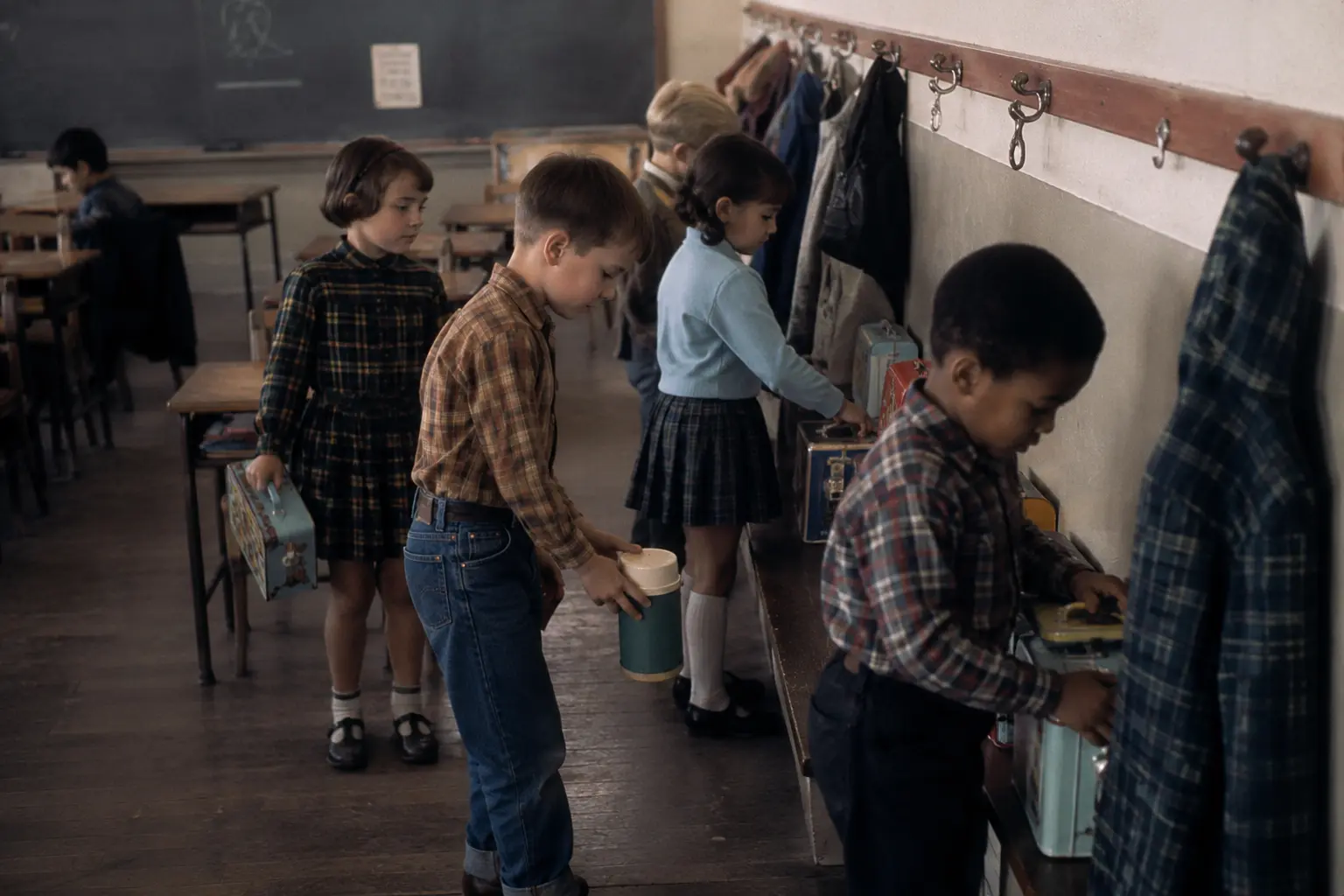
A small meal engineered for travel
The contents varied widely with region, culture, and household budget. Sandwiches wrapped in wax paper were common in many homes, joined by fruit, cookies, crackers, or something left from supper. A thermos might hold milk, soup, or another drink, provided its seal survived the journey. By noon, everything carried the faint shared scent of the closed box.
Packing lunch was an act of practical prediction. Would the child eat the apple? Would the sandwich become soggy? Could a glass-lined thermos make it through the day? The answer was not always yes. A leaking container or crushed snack became part of school lore, discovered only when the lid opened.
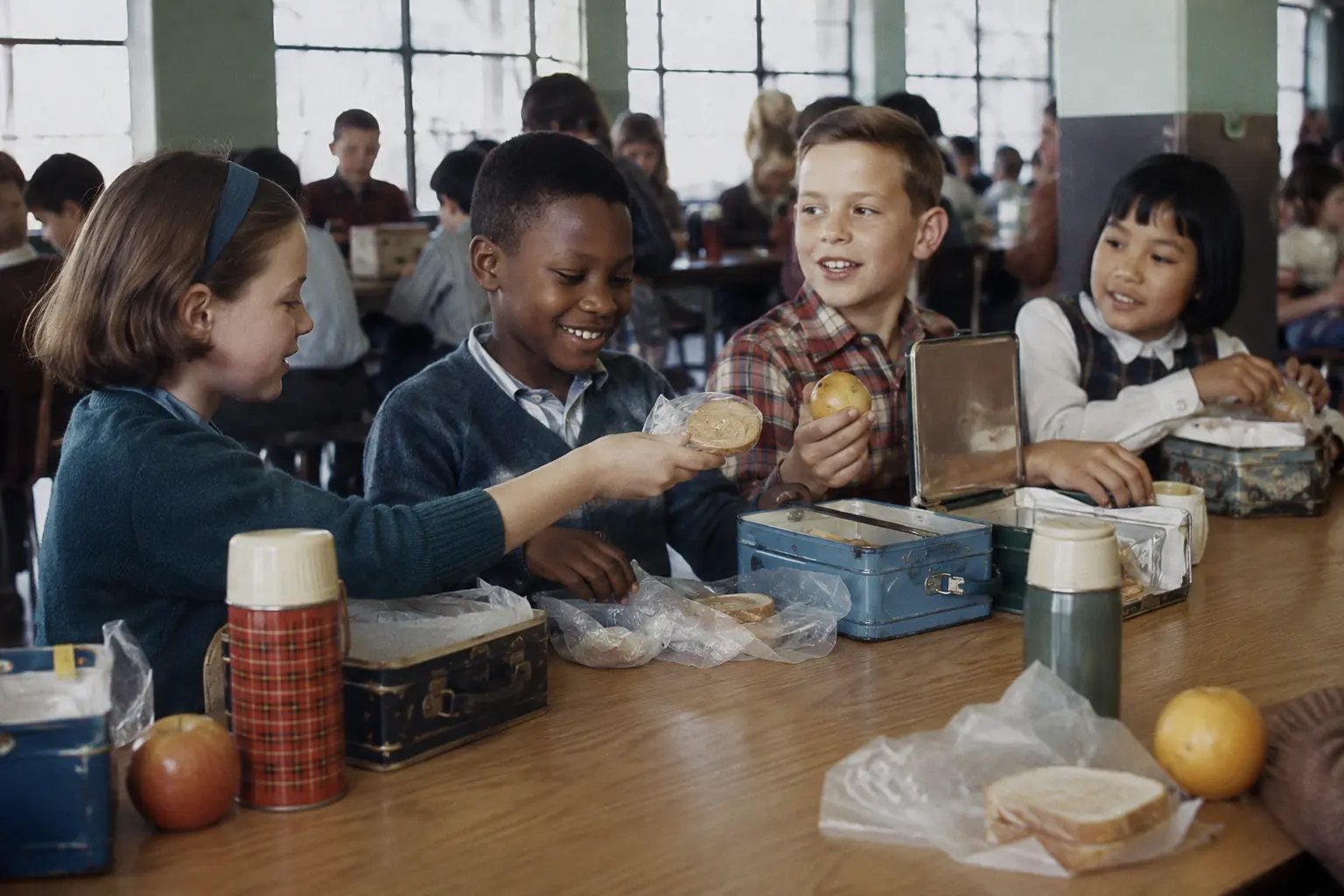
The table had its own economy
Lunch revealed the differences among households in a direct but often innocent way. One child had something another had never tasted. Favorites became trading currency, while unpopular items traveled hopefully across the table. Exchanges were governed by friendship, appetite, and rules invented on the spot.
Not every memory is cheerful. Some children felt self-conscious about a food that looked or smelled unfamiliar to classmates. Others arrived with too little. Looking back with care means remembering that the lunch table could show both abundance and strain. The most enduring stories make room for more than one kind of childhood.
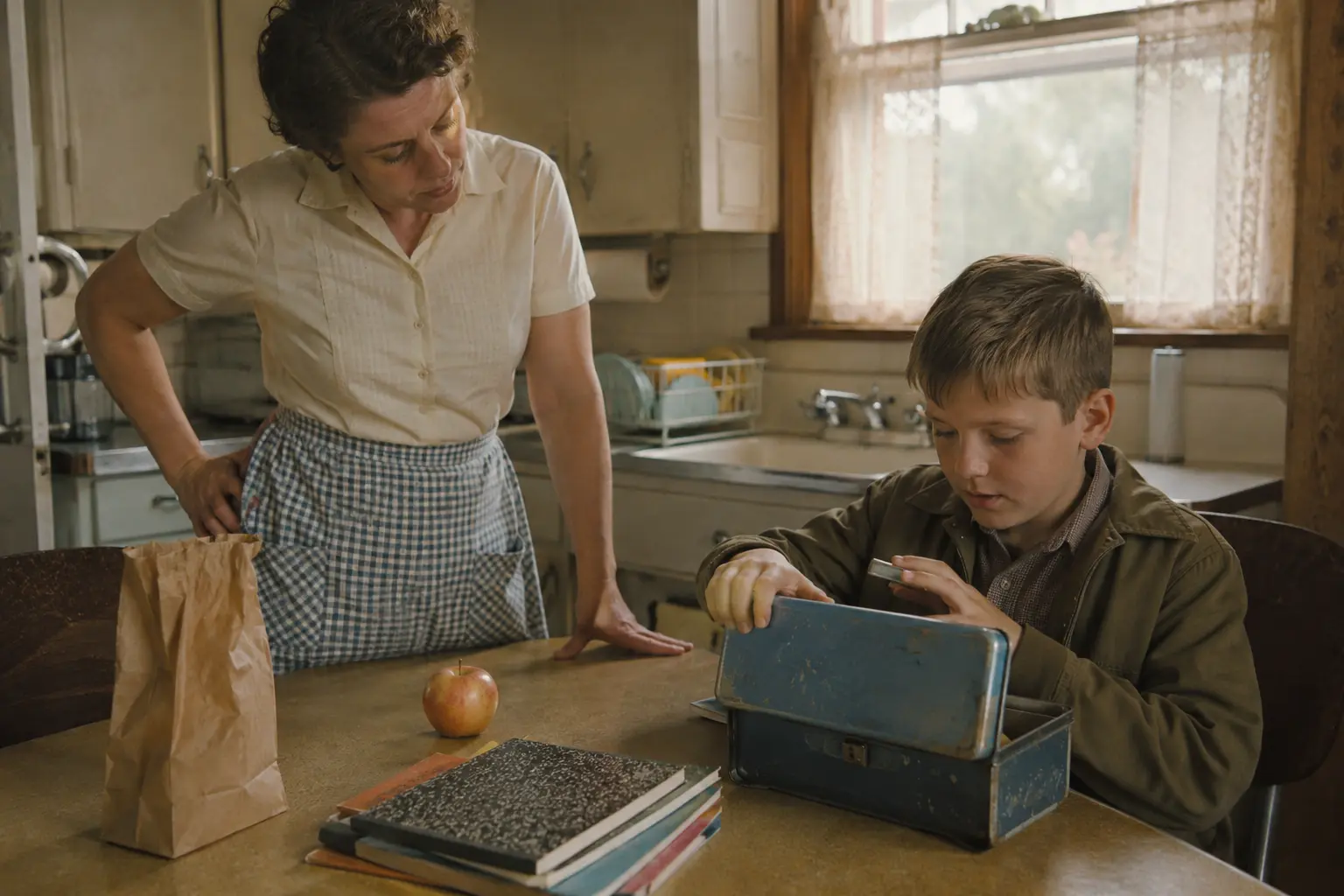
At noon, the lunchbox opened a small doorway between the school day and the kitchen at home.
The object that came home again
Unlike a paper bag, a lunchbox returned. Its scratches accumulated across the school year. The handle bore the pull of small hands, and the inside needed regular rescue from crumbs and forgotten fruit. Decoration made the box feel personal, even as popular designs changed from one group of students to the next.
At home, the empty box completed a daily circuit. An untouched item could start a conversation; a missing spoon could start a search. Then the box was wiped out and prepared to carry another ordinary message from home: here is something for the middle of your day.
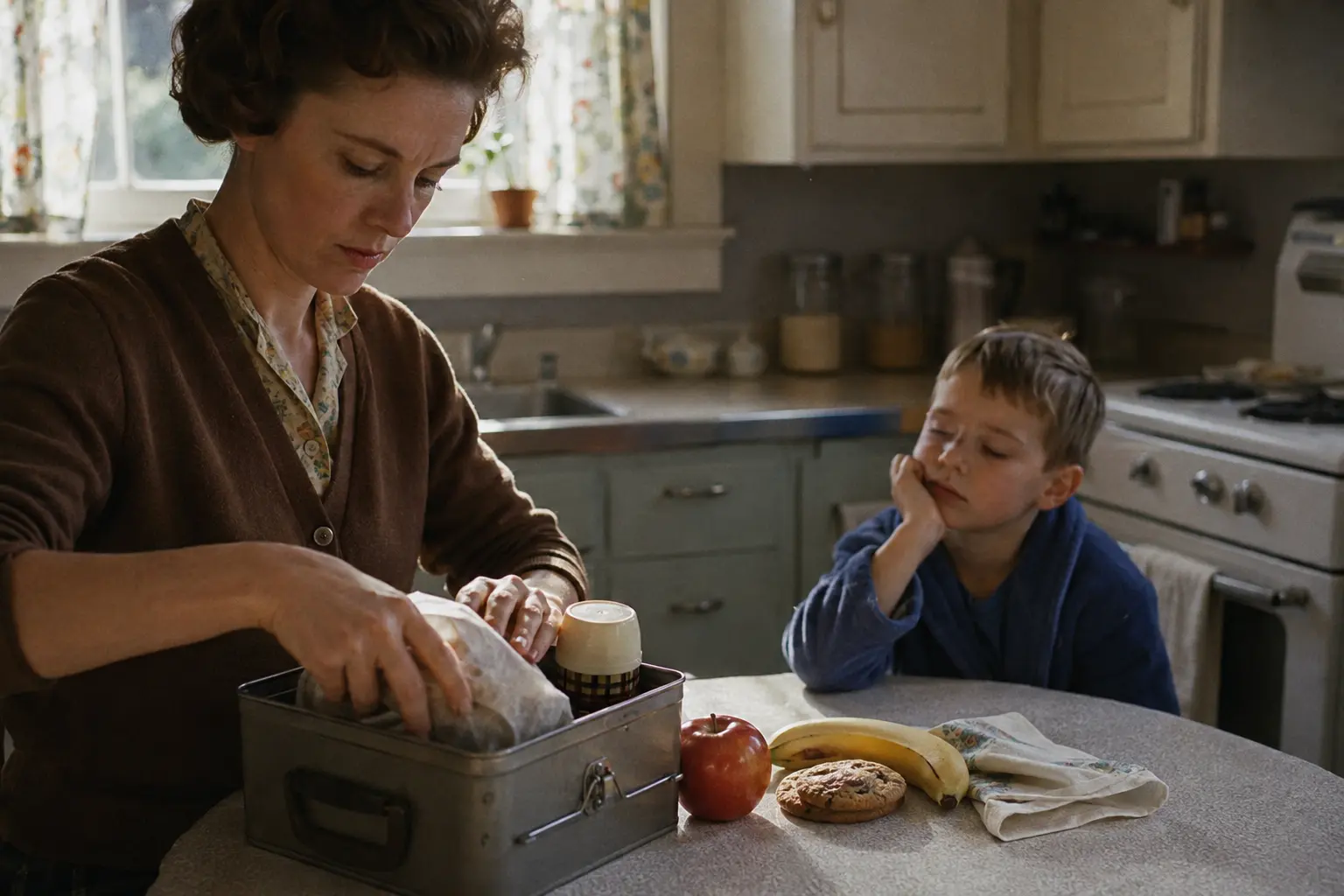
No two lunchboxes told the same story
Lunch depended on region, household budget, family background, and what could survive the morning. One child opened a neatly wrapped sandwich while another carried leftovers in a reused container. Fruit bruised, cookies broke, and thermos lids sometimes refused to move. By noon, every lunch had become a small test of planning.
The lunchroom quickly created its own economy. Children compared, traded, saved a favorite bite, or quietly wished for what someone else had. Even a familiar note or carefully folded napkin could change the middle of a hard school day. What looked ordinary to the person packing it often felt deeply personal to the child opening it.
The message hidden in the packing
Packing lunch was a practical task performed under time and budget limits, but children often read emotion into the smallest choices. A favorite cookie could feel like encouragement. A sandwich cut a familiar way signaled that someone had paid attention. Even the same predictable lunch offered reassurance in a school day filled with rules, tests, and uncertain friendships.
Adults looking back may remember the meal differently from the person who packed it. What once seemed plain can reveal planning that childhood did not notice: saving a piece of fruit, finding a container that would not leak, or rising early enough to finish the job. The lunchbox carried food, but it also carried quiet evidence of care.
Remembering lunch without inventing one menu
There was no single American lunchbox. Food reflected culture, region, household finances, dietary needs, and what a child was willing to eat in front of classmates. A truthful memory makes room for those differences instead of reducing the decade to one sandwich and one kind of treat.
The strongest family stories begin with a specific question: Who packed the lunch? What container always leaked? What food was traded, hidden, or saved for last? Specific answers create a living scene while respecting that the next table may have looked completely different.
What was the best—and worst—thing you ever found when you opened your school lunchbox?
Library of Congress Prints & Photographs · National Museum of American History Collections
This story is an original cultural-memory essay. Details varied across families, communities, and regions.